Does This Image Show Putin Reading the Bhagavad Gita? No, It’s AI-Generated
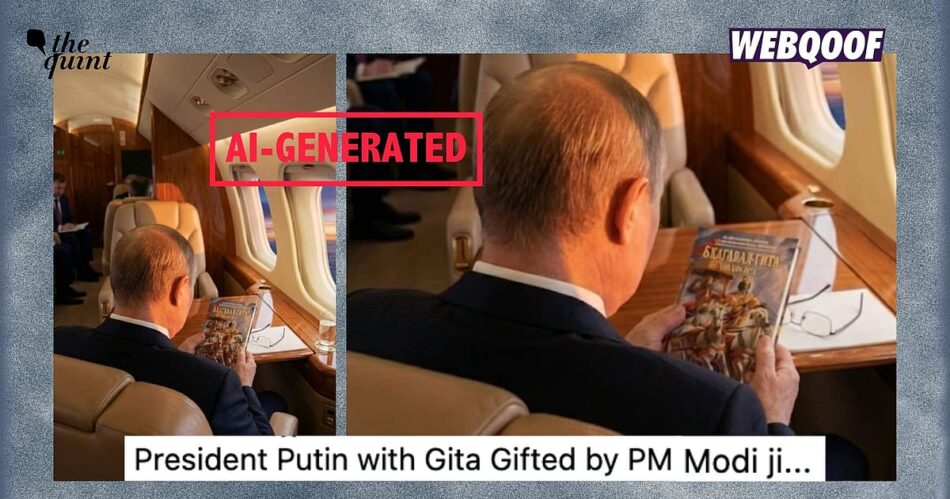
In recent weeks, a striking image purportedly showing Russian President Vladimir Putin reading the Bhagavad Gita has circulated widely on social media platforms. This image has sparked curiosity and debate among users, leading many to wonder about its authenticity.
However, a closer examination reveals that the image is not a genuine photograph but rather an AI-generated creation. This article delves into the implications of AI-generated images and the importance of verifying information in the digital age.
Continue Reading
The Origin of the Image
The image in question surfaced on various social media platforms, quickly gaining traction due to its unusual subject matter. It depicts Putin, a figure often associated with political power and authority, engaged in a contemplative moment with a revered text from Hindu philosophy.
While the image may appear convincing at first glance, it is essential to recognize that it is the product of artificial intelligence technology. AI-generated images are created using algorithms that can produce realistic visuals based on a variety of inputs, including text prompts and existing images.
The Role of AI in Image Creation
Artificial Intelligence has made significant strides in recent years, particularly in the field of image generation. Technologies such as Generative Adversarial Networks (GANs) and deep learning have enabled the creation of images that can be indistinguishable from real photographs. Here are some key points regarding AI-generated images:
- Realism: AI-generated images can mimic the nuances of real-life photography, including lighting, shadows, and textures.
- Accessibility: With user-friendly interfaces, AI tools are now available to the general public, allowing anyone to create images with minimal technical knowledge.
- Ethical Concerns: The rise of AI-generated content raises questions about authenticity, copyright, and the potential for misinformation.
The Importance of Verification
In an era where misinformation can spread rapidly, the importance of fact-checking cannot be overstated. Here are several strategies for verifying the authenticity of images and information:
- Reverse Image Search: Tools like Google Images allow users to upload an image and find its origin or similar images, helping to identify whether an image is real or manipulated.
- Fact-Checking Websites: Reputable fact-checking organizations, such as Snopes and FactCheck.org, provide resources to verify claims and debunk false information.
- Source Evaluation: Assessing the credibility of the source sharing the image can provide context and help determine its reliability.
Implications of AI-Generated Content
The proliferation of AI-generated images presents both opportunities and challenges. On one hand, these technologies can enhance creativity and provide new avenues for artistic expression. On the other hand, they can contribute to the spread of misinformation and erode trust in visual media. Key implications include:
- Media Literacy: As AI-generated content becomes more prevalent, there is a growing need for media literacy education to help individuals discern credible information.
- Legal Frameworks: Policymakers must consider how existing laws apply to AI-generated content, particularly concerning copyright and intellectual property rights.
- Public Awareness: Raising awareness about the existence and capabilities of AI-generated images can help mitigate the impact of misinformation.
Conclusion
The image of Vladimir Putin reading the Bhagavad Gita is a reminder of the complexities surrounding AI-generated content in today’s digital landscape. As technology continues to evolve, it is crucial for individuals to remain vigilant and informed, ensuring that they can navigate the challenges posed by misinformation and artificial intelligence.
Frequently Asked Questions
An AI-generated image is created using artificial intelligence algorithms that can produce realistic visuals based on various inputs, including text prompts and existing images.
You can verify an image’s authenticity by using reverse image search tools, consulting fact-checking websites, and evaluating the credibility of the source sharing the image.
Ethical concerns include issues of authenticity, copyright, and the potential for misinformation, as AI-generated content can be used to create misleading or false representations.
Note: The rise of AI-generated images necessitates a critical approach to information consumption and dissemination in our increasingly digital world.