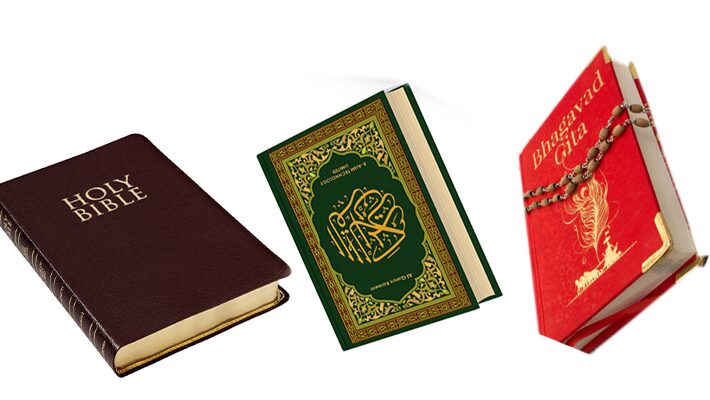
Rudolf Okonkwo: Why We Need a New Bible, Quran, and Bhagavad Gita
Throughout history, humanity has relied on sacred texts such as the Bible, Quran, and Bhagavad Gita to guide moral behavior and provide answers to existential questions. However, as society evolves, the relevance of these ancient scriptures is increasingly questioned.
Rudolf Okonkwo, a prominent voice in contemporary discourse, argues that the time has come to reconsider the foundations of these texts. He suggests that a new holy book is necessary, one that reflects the values and understanding of our modern world.
Continue Reading
The Challenge of Ancient Texts
For generations, humanity has clung to religious texts, interpreting their teachings and emulating their prophets. Yet, as we delve deeper into the complexities of our universe, we must ask ourselves whether these ancient writings still honor the concept of a higher power.
Many believers hold steadfast to their scriptures, often refusing to adapt or reconsider their interpretations in light of new knowledge. This rigidity raises critical questions about the relevance of these texts in addressing contemporary issues.
Science vs. Faith: A Clash of Perspectives
In the scientific community, theories are continually tested and revised. Scientists are open to abandoning outdated ideas when new evidence emerges. In contrast, followers of religious texts often cling to their beliefs, even in the face of contradictory evidence.
For example, the concept of immaculate conception remains unchallenged by many, despite advancements in science that could redefine our understanding of human reproduction. This unwillingness to evolve can lead to dangerous interpretations and actions based on ancient mandates.
Violence and Atrocity in Sacred Texts
Okonkwo highlights the disturbing parallels between the narratives found in the Bible and modern-day violence. The Old Testament contains numerous accounts of divine atrocities, such as the flood in Genesis and the destruction of Sodom and Gomorrah. These stories can be interpreted as justifications for violence, as seen in contemporary conflicts.
- Genesis 6–8: The flood that wiped out almost all living creatures.
- Genesis 19: The destruction of Sodom and Gomorrah.
- Exodus 7–12: The ten plagues of Egypt, culminating in the death of innocent firstborn sons.
- 1 Samuel 15: The command to destroy the Amalekites.
Such narratives can influence followers to replicate these actions, using scripture as a justification for modern horrors.
The Need for a New Holy Book
Okonkwo argues that the core issue lies not with the followers of these texts but with the texts themselves. He advocates for the creation of a new holy book that embodies the values of compassion, understanding, and peace. This new scripture should reflect a God who models the humanity we aspire to achieve, rather than one who embodies vengeance and cruelty.
In this new vision, the sacred text would serve as a guide for ethical behavior, promoting peace and coexistence rather than division and violence.
Modernizing Religious Thought
Efforts have been made to modernize religious texts, but these attempts often fall short due to the fragile nature of their foundations. The core messages are so deeply ingrained that even minor revisions can lead to significant backlash.
Okonkwo emphasizes that we must courageously confront the limitations of our current scriptures and strive for a narrative that aligns with our evolving understanding of humanity and the universe.
Conclusion
As we navigate the complexities of the modern world, it is essential to reflect on the teachings of our sacred texts. The call for a new Bible, Quran, and Bhagavad Gita is not merely a rejection of tradition but an invitation to create a narrative that fosters peace, understanding, and compassion.
Note: The creation of a new holy book could pave the way for a more harmonious existence, allowing humanity to rise above the limitations of ancient texts.
Frequently Asked Questions
Okonkwo argues that existing texts contain narratives that promote violence and division, and a new holy book is necessary to reflect modern values of compassion and understanding.
Many individuals interpret ancient texts literally, which can lead to harmful actions justified by scripture, perpetuating cycles of violence and intolerance.
A new holy book should promote values of peace, coexistence, and ethical behavior, reflecting a God that embodies the best of humanity rather than vengeance.