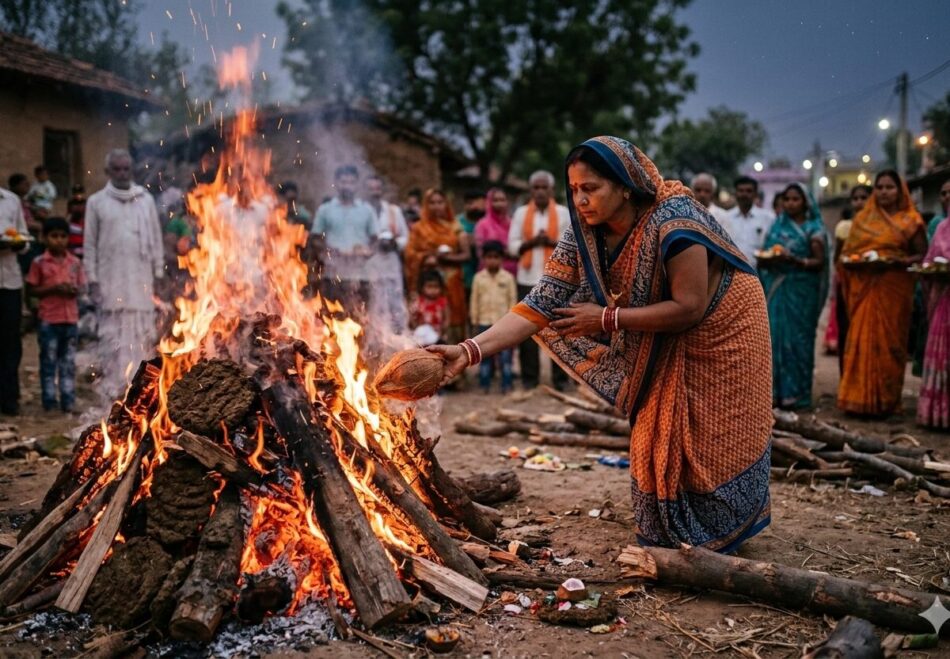
Holi 2026: Why Hindus Offer Nariyal During Holika Dahan and Its Spiritual Significance
- Offering a nariyal during Holika Dahan symbolizes surrendering ego and negative tendencies.
- The coconut is associated with prosperity and fertility, inviting blessings into homes.
- This ritual reinforces community bonds and cultural continuity across generations.
The festival of Holi, celebrated with vibrant colors and joyous gatherings, also includes the significant ritual of Holika Dahan. During this ceremony, devotees offer a nariyal, or coconut, which holds profound spiritual meaning in Hindu traditions.
The act of placing a coconut on the Holika pyre is not merely a ceremonial gesture; it embodies deep-rooted beliefs and practices that highlight the importance of purity, prosperity, and spiritual growth.
Continue Reading
The Symbolism of Nariyal in Holika Dahan
The coconut, or nariyal, is revered in Hinduism for its sacred qualities. It represents purity and divine consciousness. The hard shell signifies protection, while the white interior symbolizes the purity of mind and spirit. During Holika Dahan, the coconut is offered to Agni, the fire god, as a gesture of surrendering one’s ego and negative tendencies.
Purification and Protection
One of the primary reasons for offering a nariyal during Holika Dahan is its role as a medium of divine energy. Hindus believe that fire has the power to consume negativity, and by placing a coconut on the pyre, they enhance this purification process. This act is also an expression of gratitude towards deities for their protection and guidance.
Families often chant mantras while placing the coconut, reinforcing their spiritual intent and aligning their thoughts with positive energies during the festival.
Cultural and Spiritual Significance
The coconut is also associated with fertility and prosperity in Hindu mythology. It is linked to goddess Lakshmi, the deity of wealth, and Lord Ganesha, the remover of obstacles. By placing a coconut on the Holika pyre, devotees invite prosperity into their homes and ensure smooth paths in their personal and professional lives.
Moreover, the round shape of the coconut symbolizes completeness and the cyclical nature of life. This serves as a reminder of rebirth, renewal, and new beginnings that Holi represents.
Community and Family Heritage
The ritual of offering a coconut during Holika Dahan is deeply ingrained in tradition and family heritage. Passed down through generations, it has become an integral part of Holi festivities in many households. This practice reinforces social cohesion as families gather around the pyre, performing prayers together.
Elders play a crucial role in teaching children the importance of this offering, blending mythology with moral values. The simple act of placing a coconut thus connects individuals with divine forces, preserves cultural rituals, and instills values of purity, gratitude, and positivity.
Spiritual Cleansing and Personal Growth
During Holika Dahan, the coconut serves a protective and purifying function. Fire, considered a purifier in Hindu rituals, is believed to be empowered by the addition of a nariyal. This act symbolizes the need to subdue the human ego for spiritual advancement.
Some interpretations suggest that burning the coconut releases its latent energy, sending blessings into the surroundings. Observing this ritual allows devotees to experience a sense of catharsis, cleansing past grievances, jealousy, or anger. Holika Dahan thus transforms into a personal and communal purification process, celebrating mythological stories while fostering individual growth.
Conclusion
The offering of a nariyal during Holika Dahan is a rich tradition that encapsulates the essence of Holi. It serves as a bridge between spiritual significance and communal identity, reinforcing the values of purity, gratitude, and prosperity. As families come together to perform this ritual, they not only honor their cultural heritage but also foster a sense of unity and positivity that resonates throughout the festival.
Note: Provide a strategic conclusion reinforcing long-term business impact and keyword relevance.
Frequently Asked Questions
Hindus offer a coconut during Holika Dahan to symbolize the surrender of ego and negative tendencies, while also inviting blessings of prosperity and protection.
The coconut represents purity, divine consciousness, and the cyclical nature of life, serving as a medium for spiritual energy during rituals.
Holika Dahan promotes community bonding as families gather to perform rituals together, reinforcing social cohesion and cultural continuity across generations.