Harappans Engineered Their Own Super-Stone for Precision Drilling
- Harappans developed a synthetic stone, Ernestite, for precision drilling, enhancing their bead-making techniques.
- The engineering of Ernestite demonstrates advanced knowledge of high-temperature processing and material science.
- Understanding the composition of Ernestite can inform modern materials engineering and archaeological studies.
The Harappan civilization, known for its remarkable craftsmanship and trade, has long fascinated archaeologists and historians. Recent research has unveiled a significant advancement in their technological capabilities: the creation of a synthetic stone known as Ernestite, specifically engineered for precision drilling.
This discovery not only sheds light on the sophisticated techniques employed by Harappan craftspeople but also highlights the civilization’s innovative approach to materials engineering. The implications of this finding extend beyond archaeology, influencing contemporary practices in material science and engineering.
Continue Reading
The Discovery of Ernestite
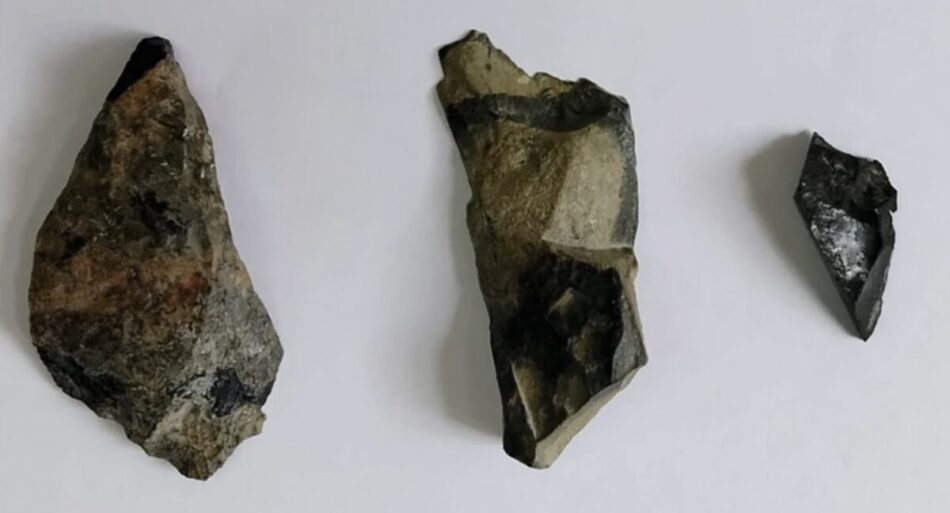
Recent studies conducted on drill bits and workshop debris from Harappan sites in Gujarat have revealed that Ernestite, previously thought to be a natural metamorphic rock, is actually a synthetic product. This transformation in understanding is attributed to advanced geochemical analyses, including petrography, mineral chemistry, and isotopic profiling.
Composition and Properties
Ernestite is characterized by its mottled appearance and exceptional hardness, making it ideal for crafting long, constricted drill bits. These tools were essential for perforating tough materials such as agate and jasper, which were commonly used in Harappan bead-making. The research indicates that Ernestite was created by mixing powdered Mesozoic sandstones with laterite-rich clays and then sintering the mixture at approximately 1100 °C.
The resulting material contains detrital quartz, ilmenite, and zircon, all fused within a fine aluminosilicate matrix identified as pseudomullite. This non-natural phase is significant as it forms only under high-temperature conditions, further emphasizing the advanced techniques employed by Harappan artisans.
Technological Implications
The engineering of Ernestite reflects a high level of technological sophistication. The ability to manipulate raw materials and control firing temperatures indicates that Harappan craftspeople possessed substantial knowledge of material properties and processing techniques. This expertise is comparable to modern materials engineering practices.
Furthermore, isotopic “fingerprinting” has established a direct link between the drill bits and the Ernestite stones, connecting them to specific geological sources in the Kutch region. This connection not only reinforces the understanding of Harappan trade networks but also highlights their resource management strategies.
Applications in Modern Engineering
The insights gained from the study of Ernestite can inform contemporary materials engineering. Understanding the composition and processing methods of this ancient synthetic stone can lead to the development of new materials with enhanced properties for various applications, including precision drilling and cutting tools.
Additionally, the techniques used to create Ernestite may inspire modern innovations in ceramics and composites, showcasing the enduring legacy of ancient engineering practices.
Conclusion
The revelation that the Harappans engineered a super-stone for precision drilling underscores their remarkable ingenuity and adaptability. By creating Ernestite, they not only advanced their bead-making capabilities but also set a precedent for future innovations in material science. This discovery enhances our understanding of the Harappan civilization and its contributions to technology and craftsmanship.
Frequently Asked Questions
Ernestite is a synthetic stone engineered by the Harappans, characterized by its exceptional hardness and used for precision drilling in bead-making.
Ernestite was created by mixing powdered Mesozoic sandstones with laterite-rich clays and sintering the blend at high temperatures, around 1100 °C.
This discovery highlights the advanced material engineering capabilities of the Harappans and can inform modern practices in materials science and engineering.
Note: Provide a strategic conclusion reinforcing long-term business impact and keyword relevance.