Study Reveals the Truth Behind the “Princess of Bagicz”
- The “Princess of Bagicz” burial dates to around AD 120, clarifying previous dating discrepancies.
- Advanced dendrochronology techniques were utilized to date the wooden coffin accurately.
- Future research includes DNA analysis and facial reconstruction to further understand her identity.
The recent study of the “Princess of Bagicz” has unveiled significant insights into one of Poland’s most intriguing archaeological discoveries. This remarkable finding not only clarifies the burial’s timeline but also enhances our understanding of the cultural practices of the Wielbark culture.
Understanding the burial practices and societal structures of ancient communities is vital for reconstructing historical narratives. The “Princess of Bagicz” serves as a key figure in this quest for knowledge, highlighting the importance of archaeological research in revealing the past.
Continue Reading
Background of the Discovery
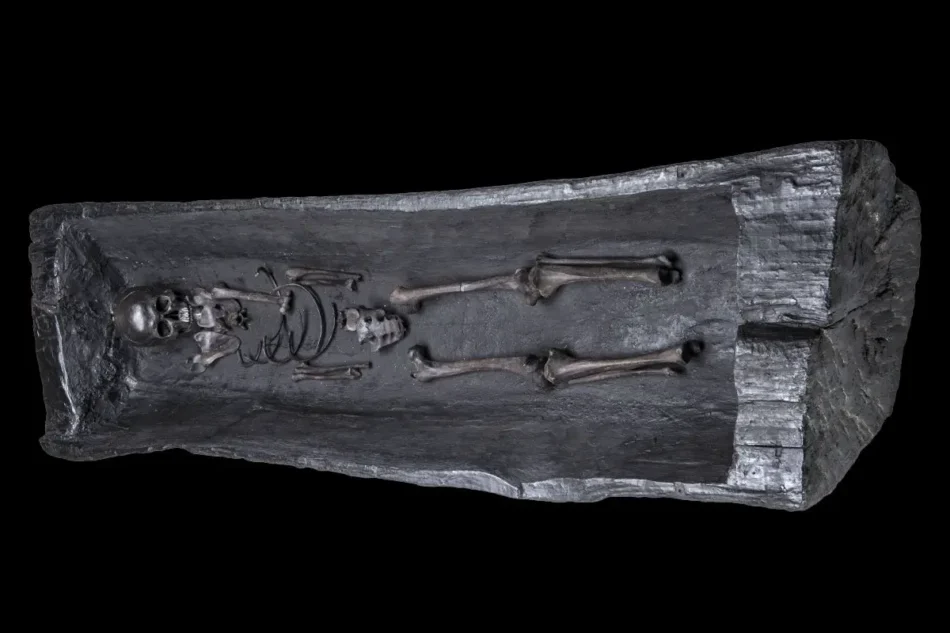
The remains of the “Princess of Bagicz” were discovered in the late 19th century in Bagicz, located in present-day West Pomeranian Voivodeship. A wooden log containing human remains slipped from a seaside cliff, prompting researchers to investigate further. The excavation revealed a coffin carved from a single tree trunk, which preserved the skeleton of a young woman alongside a collection of grave goods.
Significance of the Burial
This burial is notable for being the oldest preserved example of its kind in Poland. The grave contained various artifacts, including bronze ornaments such as a clasp, bracelets, and a necklace made of glass beads. Additionally, a bone pin, fragments of woolen clothing, a piece of cattle hide, and a small wooden stool were found, marking this site as an exceptional find in Poland’s archaeological record.
Dating Challenges and Solutions
For decades, the exact date of the burial remained uncertain. Initial assessments suggested that the grave goods dated to the late first half of the second century AD. However, a 2018 radiocarbon (C14) test on a tooth sample indicated a much earlier date, around AD 30. This discrepancy raised questions about the accuracy of the dating methods used.
To resolve the dating conflict, researchers from the University of Szczecin, the University of Warsaw, and the AGH University of Science and Technology employed dendrochronology, a method that analyzes tree-ring growth patterns to date wood. The National Museum in Szczecin permitted a minimally invasive extraction of a narrow core from the coffin, which was then compared with established tree-ring chronologies for northwestern Poland.
Findings from Dendrochronology
The results indicated that the tree used for the coffin was felled around AD 120. Given that communities associated with the Wielbark culture typically utilized freshly cut wood rather than seasoned timber, researchers concluded that the coffin was likely constructed shortly after the tree was cut. This places the woman’s death around the same time as the coffin’s creation.
Further analysis suggested that the earlier radiocarbon results might have been skewed due to the reservoir effect. The woman’s diet, which included a significant amount of freshwater fish, could have introduced “old” carbon into her system, leading to artificially early dating results.
Implications of the Findings
The findings published in the journal Archaeometry not only clarify the chronology of the “Princess of Bagicz” but also provide insights into the burial practices of the Wielbark culture. These practices reflect the social status of the individual, with the richness of the grave goods indicating an elevated position within her community.
Researchers are planning further studies, including DNA analysis and facial reconstruction, to gain a deeper understanding of the “Princess of Bagicz.” They also hypothesize that this grave may have been part of a larger cemetery, which could have been preserved due to rising water levels that submerged the site centuries later.
Future Research Directions
The ongoing research aims to explore the broader context of the Wielbark culture and its burial practices. By analyzing the artifacts and remains associated with the “Princess of Bagicz,” archaeologists hope to uncover more about the societal structures, customs, and daily lives of the people who lived during that time.
Additionally, the potential discovery of a larger cemetery could provide invaluable information about the community’s burial practices and social hierarchies. Such findings would contribute significantly to our understanding of ancient Polish history and culture.
Conclusion
The study of the “Princess of Bagicz” has not only resolved dating discrepancies but also opened new avenues for understanding the cultural practices of the Wielbark culture. As researchers continue to investigate this remarkable burial, the insights gained will enhance our knowledge of ancient societies and their complexities.
Note: Provide a strategic conclusion reinforcing long-term business impact and keyword relevance.
Frequently Asked Questions
The burial is significant as it is the oldest preserved example of its kind in Poland, providing insights into the burial practices and social structures of the Wielbark culture.
The date was determined using dendrochronology, which analyzed tree-ring growth patterns, confirming that the coffin was made around AD 120.
Future research includes DNA analysis and facial reconstruction to further understand her identity and the potential discovery of a larger cemetery.