‘Divine Bow’ Weighing 286 kg Gifted to Ram Lalla at Ayodhya Temple
- The gifting of a 286 kg golden kodand signifies a strong cultural and religious commitment.
- Crafted by 48 women artisans, this bow showcases traditional craftsmanship.
- The bow’s dimensions highlight its grandeur, measuring 8 feet long and 2.5 feet wide.
- This event enhances the spiritual significance of the Ayodhya temple complex.
The Ayodhya temple recently received a remarkable gift: a 286 kg golden kodand, symbolizing devotion and cultural heritage. This significant offering to Ram Lalla represents both a spiritual gesture and a celebration of traditional craftsmanship.
As the Ayodhya temple continues to attract devotees from around the world, the addition of such a magnificent artifact enhances its cultural importance and deepens the spiritual experience for visitors.
Continue Reading
Background of the Gift
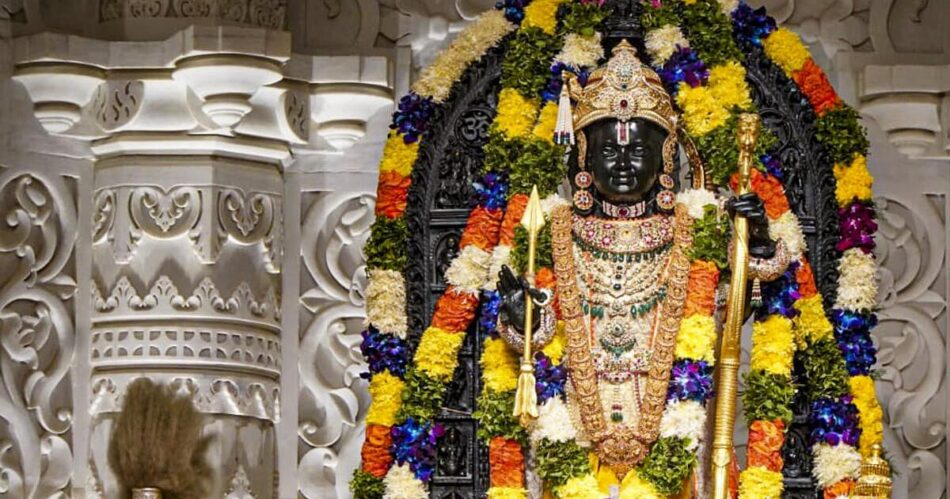
The golden kodand, or bow, was presented to Ram Lalla, the presiding deity of the Ayodhya temple. This offering is a part of a larger effort by devotees and organizations to enrich the temple’s spiritual ambiance. The bow’s creation took approximately eight months, involving the dedicated work of 48 women artisans who utilized traditional techniques to craft this magnificent piece.
Details of the Kodand
Measuring around 8 feet long and 2.5 feet wide, the kodand is not only a symbol of devotion but also a testament to the skill and artistry of the artisans involved. The use of gold in its construction adds to its value and significance, making it a centerpiece in the temple’s offerings.
The artisans faced numerous challenges during the crafting process, from sourcing materials to ensuring the bow’s structural integrity. Their efforts culminated in a piece that reflects both spiritual reverence and artistic excellence.
Significance of the Offering
This gift holds profound significance for the devotees and the broader Hindu community. It symbolizes the strength and valor associated with Lord Rama, enhancing the temple’s role as a pilgrimage site. The kodand serves not only as a decorative piece but also as a reminder of the values and teachings of Lord Rama.
Moreover, the gifting of such an extravagant item underscores the commitment of devotees to uphold and promote their cultural heritage. It reinforces the temple’s status as a vital religious and cultural hub in India.
Cultural Impact
The introduction of the golden kodand is expected to attract more visitors to the Ayodhya temple, further boosting local tourism and the economy. Pilgrims and tourists are likely to be drawn not only by the kodand itself but also by the stories and traditions associated with it.
Additionally, the artisans’ involvement in the project highlights the importance of preserving traditional craftsmanship. Their skills contribute to the rich tapestry of Indian culture, ensuring that these practices are passed down through generations.
Future Prospects
As the Ayodhya temple continues to evolve, the addition of the kodand may inspire further initiatives aimed at enhancing the temple’s offerings. Future projects could include more artifacts that celebrate cultural heritage and promote local artisanship.
Furthermore, the temple’s management may consider organizing events or exhibitions that showcase the craftsmanship involved in creating such significant pieces, thus educating visitors about the cultural importance of these traditions.
Conclusion
The gifting of the 286 kg golden kodand to Ram Lalla is a remarkable event that underscores the deep-rooted cultural and spiritual significance of the Ayodhya temple. It reflects the dedication of the artisans and the devotion of the community, marking a new chapter in the temple’s history.
Note: Provide a strategic conclusion reinforcing long-term business impact and keyword relevance.
Frequently Asked Questions
The golden kodand symbolizes devotion and cultural heritage, representing the strength and valor associated with Lord Rama.
It took approximately eight months to craft the kodand, involving the efforts of 48 women artisans.
The kodand measures around 8 feet long and 2.5 feet wide, making it a grand addition to the temple.