Rahul Gandhi Expelled From Hinduism: Shankaracharya Declares Him Non-Hindu
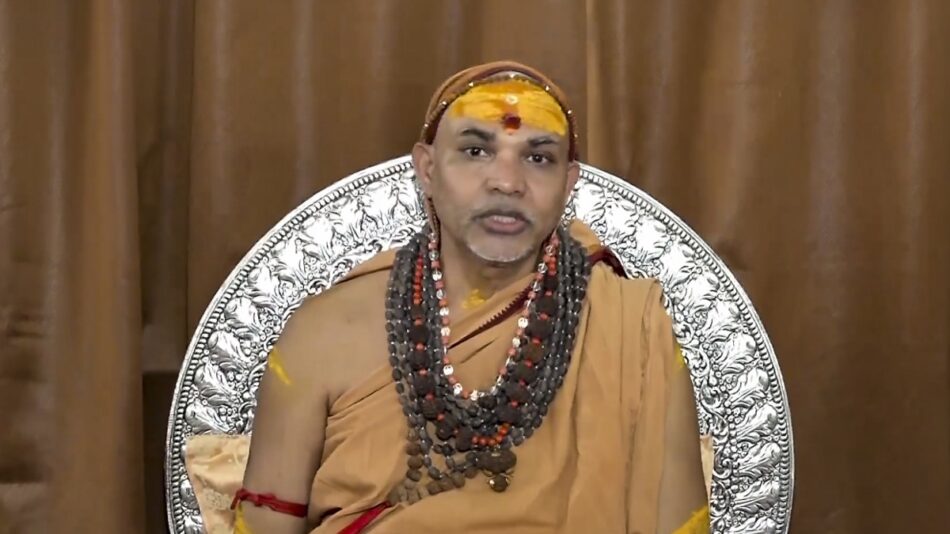
In a significant religious declaration, Rahul Gandhi, a prominent leader of the Indian National Congress, has been labeled a “non-Hindu” by Shankaracharya Swami Avimukteshwaranand Saraswati. This announcement has sparked widespread discussions about the intersection of politics and religion in India.
The Shankaracharya’s remarks come in response to Gandhi’s comments on Manusmriti, a historical text that has been a point of contention in Indian society. The seer’s statement has raised questions about religious identity and the implications of political discourse on faith.
Continue Reading
Context of the Declaration
On May 4, 2025, Swami Avimukteshwaranand Saraswati publicly declared Rahul Gandhi as non-Hindu, following his remarks regarding Manusmriti made during a parliamentary session. The Shankaracharya claimed that these comments were offensive to the followers of Sanatan Dharma, a term often used to refer to the eternal principles of Hinduism.
Implications of the Shankaracharya’s Statement
The declaration has several implications, both for Rahul Gandhi and the broader political landscape in India:
- Religious Identity: The Shankaracharya’s statement raises questions about the criteria for being considered a Hindu and the role of religious leaders in defining such identities.
- Political Ramifications: This declaration could affect Gandhi’s political standing, especially among Hindu voters who may view the Shankaracharya’s opinion as influential.
- Public Sentiment: The public reaction to this declaration may vary, with some supporting the Shankaracharya’s stance while others may view it as an overreach into personal beliefs.
Swami Avimukteshwaranand’s Further Comments
In addition to labeling Gandhi as a non-Hindu, Swami Avimukteshwaranand urged that Gandhi should be prohibited from accessing Hindu temples across the country. He emphasized that only sincere devotees should partake in religious activities, particularly during the ongoing Chardham Yatra, a significant pilgrimage in Uttarakhand.
The Shankaracharya also called upon Hindu priests to refrain from performing any rituals or pujas on behalf of Gandhi, suggesting that his actions have contradicted Hindu principles.
The Chardham Yatra and Its Significance
The Chardham Yatra consists of visits to four sacred shrines: Kedarnath, Badrinath, Gangotri, and Yamunotri. The pilgrimage is considered a vital spiritual journey for adherents of Sanatan Dharma. Swami Avimukteshwaranand stressed that:
- The Yatra should not be treated as a mere tourist attraction.
- Visitors should approach the pilgrimage with a pure heart and spiritual intent.
- Non-Hindus should not participate in the Yatra, reinforcing the idea of exclusivity in religious practices.
Calls for Government Action
Swami Avimukteshwaranand has also urged the government to ensure that all devotees visiting the Chardham shrines receive darshan (viewing of the deities) and leave satisfied. He recommended that individuals with concerns or suggestions regarding the Yatra should formally communicate these to the authorities for improvements.
Response from Political Leaders
The political response to this declaration has been varied. Some leaders from the Congress party have defended Rahul Gandhi, arguing that religious identity should not be politicized. Others have criticized Gandhi’s comments, suggesting that they undermine Hindu values.
Frequently Asked Questions
Rahul Gandhi was declared a non-Hindu by Shankaracharya Swami Avimukteshwaranand Saraswati due to his comments on Manusmriti, which were perceived as offensive to followers of Sanatan Dharma.
The Chardham Yatra is a pilgrimage to four sacred sites in Uttarakhand, India: Kedarnath, Badrinath, Gangotri, and Yamunotri, significant for adherents of Hinduism.
Political reactions have been mixed, with some defending Rahul Gandhi and others criticizing his remarks as undermining Hindu values.
Note: The intersection of politics and religion in India continues to be a complex and sensitive issue, with declarations like these influencing public perception and political dynamics.