The Lion of the Fountain: Unveiling a New Archaeological Treasure at Philippi
- Discover how the recent excavation at Philippi reveals insights into Roman and Byzantine architectural practices.
- Learn about the historical significance of the Lion of the Fountain in relation to Philippi’s evolution.
- Understand the implications of the findings for the study of early Christianity in Europe.
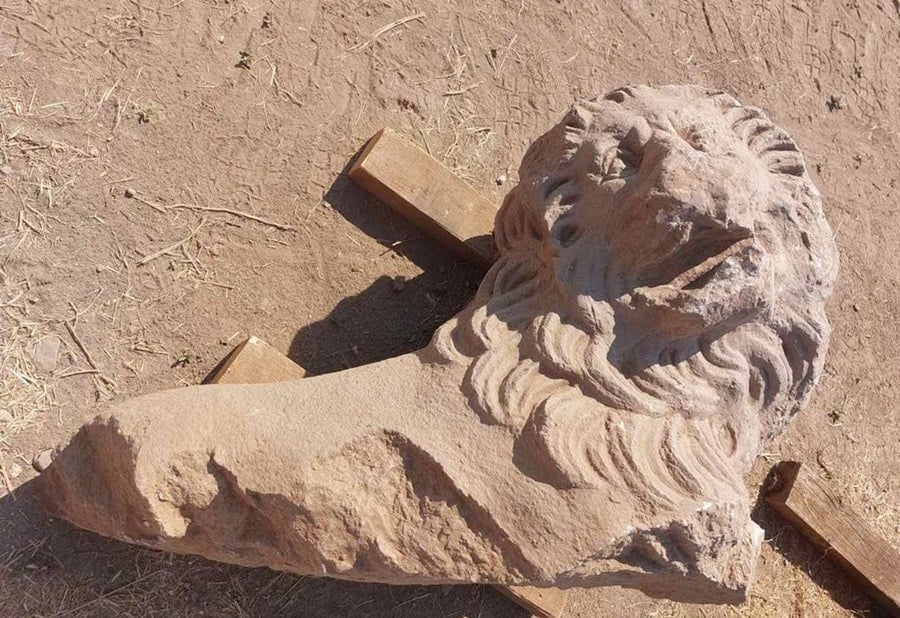
The recent excavation at Philippi has unveiled a remarkable archaeological treasure: a large-scale marble lion, symbolizing the city’s rich historical narrative.
This discovery not only enhances our understanding of Philippi’s architectural evolution but also highlights its significance as a major center for both Roman and early Christian history.
Continue Reading
The Discovery of the Lion
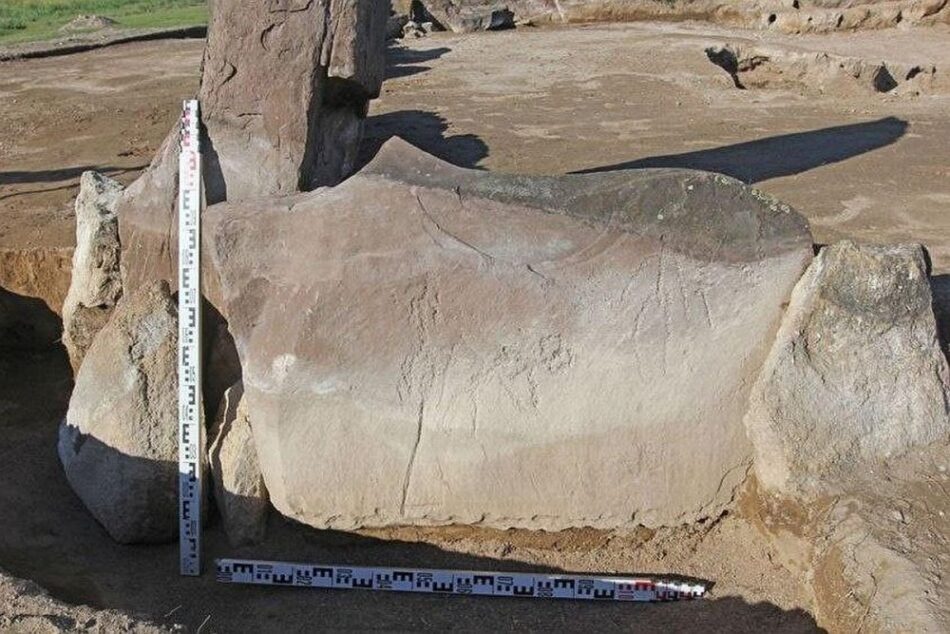
Unearthed by a research team from Aristotle University of Thessaloniki during the 2025 excavation season, the marble lion was found in excellent condition at the southern decumanus, a primary thoroughfare of the ancient city. This striking sculpture, with its detailed mane and noble pose, likely adorned a monumental fountain (nymphaeum) at the junction of the city’s two main roads.
Insights from the Excavation
The excavation team focused on fully exposing the fountain house, revealing its entire footprint and a section of the paved square that marked this vital intersection. Among the significant findings were numerous marble relief fragments, specifically curved parapets arranged in a shell-like configuration that once directed water flow. Two of these fragments were successfully reunited with the parapet still in situ, restoring part of the fountain’s original design.
Additionally, the site yielded important epigraphic evidence, including two fragments of Latin inscriptions likely from the fountain’s architrave. One fragment bears the letters “PHILIP,” while the other preserves two lines of text: “P·NYMP” and “REI·PVB,” confirming the structure’s formal identity.
Stylistic Discordance and Historical Context
The marble lion’s discovery is particularly intriguing due to its stylistic discordance. While it likely dates to the Roman Imperial period, it does not match other sculptures recovered from the site in previous years. This discrepancy suggests that the fountain was remodeled during the early Middle Byzantine period, incorporating various architectural elements and sculptures from earlier periods.
This practice, characteristic of a time of “historicism,” indicates that Byzantine builders were intentionally integrating Roman aesthetics to evoke a sense of antiquity. The construction techniques observed at the fountain, along with its placement over the paving slabs of the road junction, imply a significant redesign during the Early Middle Ages.
Broader Archaeological Findings
Beyond the monumental lion, the 2025 excavation season revealed a wealth of smaller artifacts, including ceramics, bronze coins, and various metal objects, as well as an intact marble basin. These findings contribute to a consistent picture of Philippi as a focal point of urban activity long after its initial Roman construction.
The evidence suggests that the crossroads at Philippi was not merely a transit point but rather a dynamic space where different historical eras—Roman utility and Byzantine historicism—converged and left their mark.
Philippi’s Historical Significance
Founded in 360 BC by Thasian colonists as Crenides, Philippi was later conquered and renamed by Philip II of Macedon in 356 BC. Recognizing its strategic value due to nearby gold mines and its location on the Via Egnatia, a vital Roman road connecting the Adriatic to the Bosporus, Philippi evolved into a wealthy, self-governing metropolis.
The city played a pivotal role in Western history during two significant events. First, in 42 BC, the Battle of Philippi marked the final stand of Julius Caesar’s assassins against the forces of Mark Antony and Octavian, effectively ending the Roman Republic. Furthermore, Philippi became a spiritual milestone when the Apostle Paul arrived in 49/50 AD, founding what is considered the first Christian church on European soil, thus transforming the city into a major center of early Christianity.
UNESCO World Heritage Site
Today, as a UNESCO World Heritage site, Philippi stands as one of the most complete examples of an ancient city, showcasing the transition from classical grandeur to the early medieval era. The recent discoveries, particularly the Lion of the Fountain, not only enhance our understanding of the city’s historical significance but also contribute to ongoing discussions about its role in the broader context of European history.
Frequently Asked Questions
The Lion of the Fountain represents a key archaeological find that provides insights into the architectural evolution of Philippi and its historical significance during the Roman and Byzantine periods.
This discovery highlights Philippi’s role as a major center for early Christianity, particularly due to the Apostle Paul’s founding of the first Christian church in Europe.
In addition to the lion, the excavation uncovered ceramics, bronze coins, metal objects, and an intact marble basin, indicating the site’s continuous urban activity over centuries.
Note: Provide a strategic conclusion reinforcing long-term business impact and keyword relevance.