5 Holi-Like Festivals: From Spanish Cascamorras to Thailand’s Songkran
- Experience cultural diversity through vibrant festivals celebrated with water, food, and community.
- Learn about the significance of cleansing and renewal in global celebrations.
- Discover unique traditions that attract tourists and promote local economies.
- Explore how these festivals foster community spirit and cultural heritage.
Festivals around the world often serve as a reflection of cultural values and traditions. Among these, some share similarities with the Indian festival of Holi, known for its vibrant colors and joyous celebrations. This article explores five such festivals that embody the spirit of Holi through unique customs and communal participation.
From the water fights of Thailand to the tomato-throwing frenzy in Spain, these festivals not only celebrate local culture but also attract tourists, boosting local economies. Understanding these events provides insight into the rich tapestry of global traditions and the universal themes of renewal and joy.
Continue Reading
1. Songkran (Thailand)
Songkran, celebrated from April 13 to 15, marks the traditional New Year in Thailand. This festival coincides with the sun’s transition into the Aries constellation after the rice harvest. One of the most distinctive features of Songkran is the public water fights that symbolize cleansing and renewal.
During this time, families come together to honor their elders and pay respect to sacred Buddha images by pouring water over them. The act of splashing water on friends and family is not only fun but also considered auspicious, representing good fortune and the washing away of misfortunes.
2. Cascamorras (Spain)
Cascamorras is an annual festival held on September 6 in the towns of Guadix and Baza in Spain. This unique celebration revolves around a local legend involving the Virgen de la Piedad. According to the tale, a resident of Guadix discovered the Virgin’s image while working in Baza, leading to a joint celebration between the two towns.
During the festival, a participant known as the Cascamorras attempts to “steal” the Virgin statue from Baza. However, townspeople retaliate by dousing him in gallons of black paint, resulting in a chaotic and colorful battle. This lively event draws crowds and showcases the community’s spirit and rivalry.
3. La Tomatina (Spain)
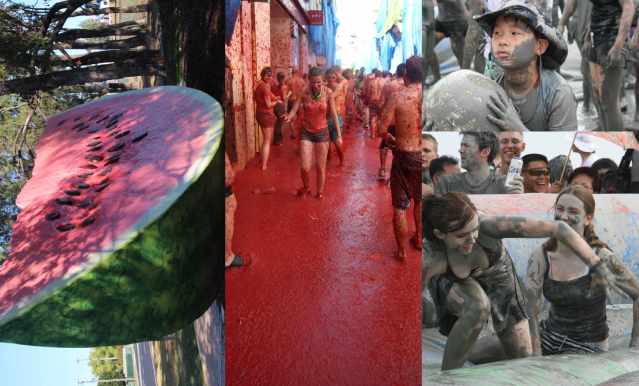
La Tomatina, held on the last Wednesday of August in Buñol, Spain, is renowned as the world’s largest food fight. This festival originated in the 1940s when a group of friends engaged in a playful tomato-throwing battle. Over the years, it has evolved into a major tourist attraction.
Participants throw overripe tomatoes at each other for about an hour, creating a sea of red pulp. Since 2013, attendance has been limited to 20,000 ticketed participants, ensuring a more organized and enjoyable experience. The festival also includes a greased pole climbing contest, adding to the excitement of the day.
4. Chinchilla Watermelon Festival (Australia)
Every two years, the small town of Chinchilla in Australia hosts the Chinchilla Watermelon Festival, celebrating its title as the “Melon Capital.” This festival features a variety of quirky events, including melon skiing, where participants strap watermelon halves to their feet and slide across a slippery course.
The four-day festival also includes activities like melon bungee jumping, pip spitting contests, and watermelon chariot races. The highlight is the watermelon weigh-in, where winning melons can weigh over 80 kilograms. This festival not only promotes local agriculture but also fosters community engagement and tourism.
5. Boryeong Mud Festival (South Korea)
The Boryeong Mud Festival, first held in 1998, takes place annually during the summer at Daecheon Beach. Initially conceived as a marketing strategy for Boryeong mud cosmetics, the festival has grown to attract millions of visitors each year.
During the festival, mineral-rich mud is transported to the beach, where attendees can participate in various mud-related activities, including mud wrestling and mudslides. The festival spans about two weeks, with the final weekend being the most popular. This event not only promotes local products but also highlights the importance of community and fun in South Korean culture.
Frequently Asked Questions
Songkran marks the traditional New Year in Thailand and symbolizes cleansing and renewal through water fights, where families honor elders and sacred images.
La Tomatina began in the 1940s as a playful food fight among friends and has since transformed into a major festival attracting thousands of participants.
The festival includes unique events such as melon skiing, pip spitting contests, and a watermelon weigh-in, celebrating the local agricultural heritage.
Note: Provide a strategic conclusion reinforcing long-term business impact and keyword relevance.