Holi – A Festival That Celebrates Good Food
- Explore the diverse culinary traditions associated with Holi across India.
- Learn how food plays a crucial role in strengthening community bonds during the festival.
- Discover the significance of traditional dishes like gujiya and dahi bhalla in Holi celebrations.
- Understand the cultural importance of meat dishes in certain regions during Holi.
Holi, the vibrant festival of colors, is not only a visual spectacle but also a grand celebration of flavors and culinary traditions. As spring arrives, homes across India transform into bustling kitchens filled with the aromas of spices and sweets, bringing families together through the joy of cooking and sharing.
This festival serves as a reminder of the rich diversity of Indian cuisine, where each region contributes its unique dishes, reflecting local ingredients and cultural influences. The food prepared during Holi symbolizes love, generosity, and a sense of community, making it an integral part of the festivities.
Continue Reading
The Culinary Essence of Holi
As Holi approaches, the anticipation builds not just for the colors but for the delightful dishes that accompany the celebrations. Each region in India has its signature dishes that are prepared with love and care, making the festival a true feast for the senses.
Signature Dishes of Holi
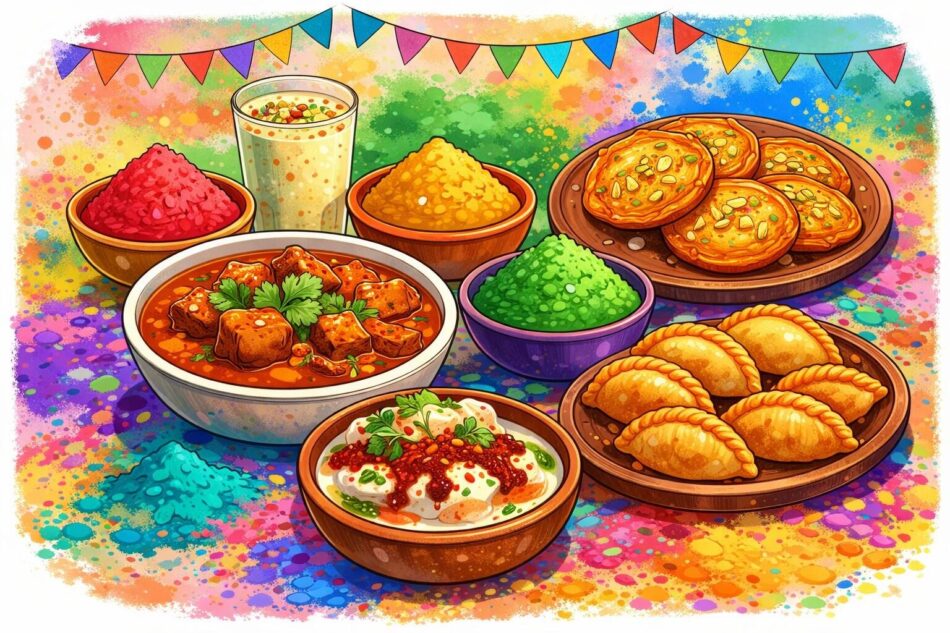
In Uttar Pradesh and Delhi, the beloved gujiya takes center stage. These delicate pastries, filled with sweetened khoya and nuts, are deep-fried to golden perfection. The process of making gujiya often becomes a family affair, with grandmothers teaching younger generations the art of folding the pastries, creating a sense of nostalgia and togetherness.
Another favorite is dahi bhalla, soft lentil dumplings soaked in creamy yogurt and topped with tangy chutneys. This dish is a refreshing counterpoint to the sweetness of gujiya, offering a balance of flavors that enhances the festive experience.
Regional Variations
Moving westward to Maharashtra, the sweet puran poli is a must-try. This flatbread, filled with a mixture of jaggery and lentils, symbolizes abundance and is often enjoyed with ghee. In Gujarat, shrikhand and savory farsan add a rich variety to the festive spread, showcasing the region’s culinary diversity.
In West Bengal, the festival is celebrated with malpua and delicate sandesh, sweet treats that embody the spirit of Holi. Each dish tells a story, reflecting the local culture and traditions.
The Role of Meat in Holi Celebrations
While sweets often dominate the culinary landscape of Holi, the tradition of cooking meat is also significant in many communities. In agrarian regions such as Uttar Pradesh, Bihar, and parts of West Bengal, Holi marks the end of winter and the arrival of spring, a time of abundance and celebration.
Meat dishes, particularly slow-cooked mutton or spiced chicken, are prepared to symbolize prosperity and renewal. The night of Holika Dahan, which signifies the burning away of negativity, is often followed by a hearty meal that celebrates life and vitality.
The Importance of Sharing Food
Food during Holi is more than just sustenance; it is a medium of connection. Sharing dishes like gujiya and dahi bhalla fosters a sense of community and togetherness. Neighbors and friends come together to enjoy the festive spread, reinforcing bonds and spreading goodwill.
The act of preparing and sharing food during Holi encapsulates the essence of the festival—joy, love, and unity. Each bite taken together becomes a celebration of life, making the festival memorable and meaningful.
Conclusion
Holi is a vibrant festival that transcends mere celebration of colors; it is a culinary journey that showcases the rich diversity of Indian cuisine. From the sweet gujiya to the savory dahi bhalla, each dish tells a story of tradition and love. As families gather to enjoy these delicacies, they not only celebrate the arrival of spring but also the bonds that tie them together.
Note: The culinary traditions of Holi reflect the festival’s deeper significance, emphasizing community, sharing, and the joy of togetherness.
Frequently Asked Questions
Traditional dishes include gujiya, dahi bhalla, puran poli, shrikhand, and malpua, each representing different regional flavors and customs.
In many agrarian communities, meat symbolizes prosperity and abundance, marking the end of winter and the celebration of spring’s arrival.
Food enhances the Holi experience by fostering community bonds, encouraging sharing, and creating lasting memories through the joy of cooking and eating together.