3,000 Years of Ancient Diets in Poland Reveal Migration and Early Social Divisions
- Understanding ancient diets offers insights into migration patterns and social structures.
- Archaeological methods reveal how food choices reflect adaptation to environmental changes.
- Dietary variations indicate early social inequalities and cultural identities among prehistoric communities.
The exploration of ancient diets in Poland provides a unique lens through which we can understand the migration and social dynamics of prehistoric communities. Recent research has uncovered how food choices were not merely about sustenance but were deeply intertwined with identity and social organization.
This study, which spans nearly three millennia, highlights the complex interactions between different groups and their environments. By analyzing human remains and employing advanced scientific techniques, researchers have revealed significant insights into the diets of ancient populations in north-central Poland.
Continue Reading
The Research Framework
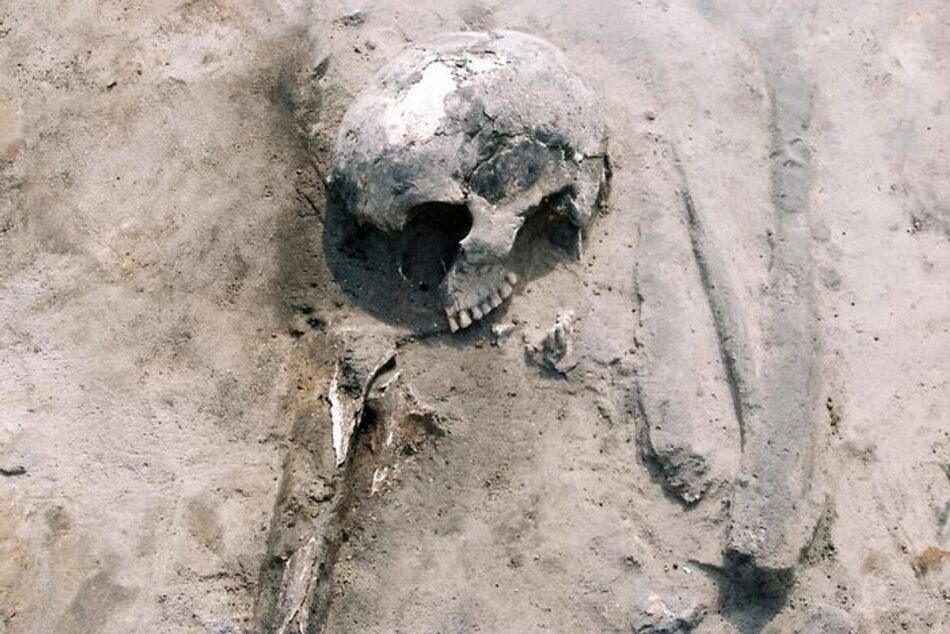
Conducted by an international team of archaeologists and scientists, the research involved the analysis of human remains from 60 individuals, covering the Neolithic to the Bronze Age. This period marks significant transitions in Central European prehistory, including the arrival of groups with steppe ancestry and the introduction of millet as a staple crop.
Archaeological and Scientific Techniques
To uncover the dietary habits of these ancient communities, researchers utilized a combination of archaeological and anthropological methods, radiocarbon dating, ancient DNA analysis, and stable isotope measurements of carbon and nitrogen. This multidisciplinary approach allowed for a comprehensive reconstruction of diets, farming strategies, and social organization.
Insights from Corded Ware Communities
One of the key findings relates to the Corded Ware communities, who settled in the region around 2800 B.C.E. Contrary to previous assumptions that these groups favored open grasslands for herding, isotopic evidence indicates that they grazed their animals in forests or wet river valleys. This suggests a strategic adaptation to the local environment rather than a rigid adherence to traditional practices.
The Role of Millet in Identity Formation
The introduction of millet around 1200 B.C.E. marked a significant dietary shift. While some communities embraced millet as a staple, others consumed little or none, reflecting distinct cultural identities. These dietary preferences were closely linked to burial practices, with some groups using communal tombs while others opted for unique paired burials.
Social Inequalities Revealed Through Diet
Dietary evidence also sheds light on early social inequalities. Variations in nitrogen isotope values indicated differences in access to animal protein, a resource associated with higher social status. During the Early Bronze Age, certain individuals consistently consumed more animal products, hinting at the emergence of social hierarchies that were not immediately apparent from grave goods alone.
Implications of the Findings
The findings challenge the notion that peripheral regions simply imitated cultural centers. Instead, they suggest that prehistoric communities in north-central Poland developed unique solutions to their social and environmental challenges, blending innovation with adaptation. By interpreting food as a historical record, researchers are uncovering how ancient societies navigated migration, identity, and environmental change.
Conclusion
The study of ancient diets in Poland not only enhances our understanding of the past but also provides a framework for analyzing the complexities of human behavior and social structures. As we continue to explore these ancient practices, we gain valuable insights into the interplay between environment, culture, and identity.
Frequently Asked Questions
The study indicates that dietary choices reflect adaptation to new environments and migration patterns, showcasing how communities integrated into their surroundings.
Millet became a staple for some communities, creating distinct cultural identities and influencing burial practices, which in turn reflected social hierarchies.
The research employed a combination of radiocarbon dating, ancient DNA analysis, and stable isotope measurements to reconstruct ancient diets and social dynamics.
Note: Provide a strategic conclusion reinforcing long-term business impact and keyword relevance.