Mysterious Stone in US Backyard Turned Out to Be an Archaeological Treasure
- Discovering historical artifacts can lead to significant cultural insights.
- Engaging experts is crucial for proper identification and preservation of artifacts.
- Understanding the journey of artifacts enhances their historical value.
In a remarkable turn of events, a couple in New Orleans uncovered a stone slab in their backyard that transformed from a mere garden decoration into a significant archaeological discovery. This incident highlights the importance of recognizing and preserving historical artifacts.
The stone, inscribed in Latin, initially appeared to be a decorative piece. However, its true significance was revealed through expert analysis, showcasing the rich history embedded in seemingly ordinary objects.
Continue Reading
Discovery of the Stone
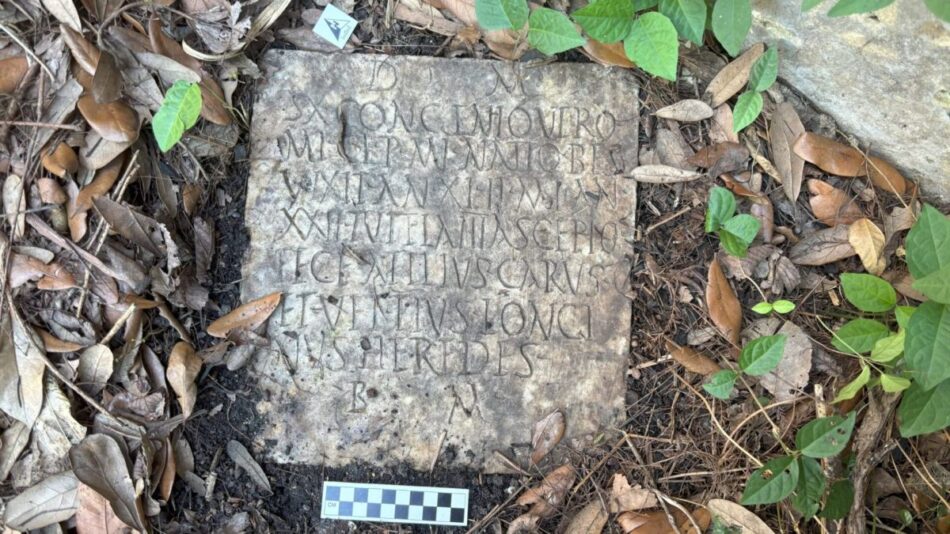
The couple, Daniella Santoro and Aaron Lopez, were engaged in a gardening project when they stumbled upon a marble slab partially buried in their yard. The stone was etched with Latin inscriptions, including the phrase “spirits of the dead,” which immediately piqued their curiosity. Santoro, an anthropologist, recognized that this was not an ordinary find.
Expert Consultation
Realizing the potential significance of their discovery, Santoro reached out to experts in the field. Archaeologist Susann Lusnia from Tulane University and anthropologist D. Ryan Gray from the University of New Orleans examined the stone. Their expertise confirmed that the inscription was a common dedication found on Roman funerary tablets.
Understanding Roman Funerary Practices
The Latin text on the stone began with “Dis Manibus,” translating to “to the spirits of the dead.” This phrase was typically inscribed at the top of tombstones in Roman culture, indicating a dedication to the deceased. The stone commemorated a Roman soldier named Sextus Congenius Verus, who had served for 22 years and died at the age of 42. The inscription also revealed that it was commissioned by his heirs, Atilius Carus and Vettius Longinus.
The Journey of the Artifact
Interestingly, this stone was not a new find. It had previously been documented in the early 20th century as part of the collection at the National Archaeological Museum of Civitavecchia in Italy. The museum suffered extensive damage during World War II, resulting in the loss of numerous artifacts, including this grave marker.
The stone’s journey from Italy to Louisiana remains a mystery. Erin Scott O’Brien, the former owner of the house where the stone was found, recounted that her grandfather, Charles Paddock Jr., a soldier stationed in Italy during the war, had displayed the stone among other heirlooms. When O’Brien inherited the stone, she believed it to be a mere decorative piece and placed it in her garden.
Repatriation Efforts
After the stone’s historical significance was established, efforts were initiated to return it to its rightful home. The FBI’s Art Crime Team is coordinating the repatriation of the artifact to the National Archaeological Museum of Civitavecchia. This process emphasizes the importance of returning cultural treasures to their countries of origin, where they can be preserved and appreciated in their historical context.
Conclusion
The discovery of this stone slab serves as a reminder of the hidden treasures that may lie beneath our feet. It underscores the need for awareness and appreciation of historical artifacts, as well as the importance of expert involvement in identifying and preserving them. The journey of the stone from a backyard in Louisiana back to Italy exemplifies the interconnectedness of history and culture, reinforcing the significance of safeguarding our shared heritage.
Frequently Asked Questions
The stone was a Roman funerary tablet commemorating a soldier, highlighting its archaeological and historical importance.
The stone was likely brought to the U.S. by a soldier during World War II and later passed down through family generations.
The stone is being repatriated to the National Archaeological Museum of Civitavecchia, where it will be preserved and displayed.
Note: Provide a strategic conclusion reinforcing long-term business impact and keyword relevance.