Excavating Beneath an Italian Square: The Rediscovery of Vitruvius’ Lost Basilica
- The recent discovery of Vitruvius’ basilica in Fano offers insights into ancient urban planning and architecture.
- This find can significantly impact modern urban design, emphasizing climate-responsive architecture.
- Integrating archaeological sites into urban redevelopment can enhance cultural tourism and local economies.
- Understanding Vitruvius’ principles can guide contemporary city planning towards healthier environments.
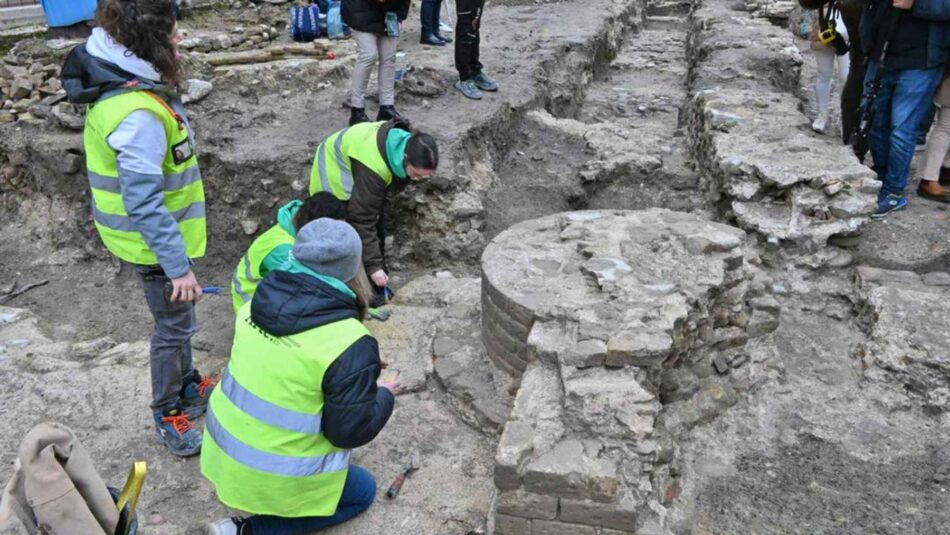
After centuries of speculation and search, archaeologists have confirmed the existence of a basilica designed by Marcus Vitruvius Pollio, dating back to 19 BCE, beneath the bustling Piazza Andrea Costa in Fano, Italy.
This remarkable discovery not only provides a tangible link to one of antiquity’s most influential architects but also reshapes modern perspectives on urban planning and climate-conscious design.
Continue Reading
The Significance of the Discovery
The basilica, characterized by its rectangular layout and colonnade, aligns precisely with the descriptions found in Vitruvius’ seminal work, De Architectura. This text has been foundational in Western architecture, emphasizing the importance of design that responds to environmental conditions.
Culture Minister Alessandro Giuli hailed the find as a “sensational discovery,” marking a pivotal moment in archaeological research. Local officials assert that this event will resonate through generations, highlighting the basilica’s potential to transform Fano’s urban landscape.
Architectural Details
The basilica features a perimeter colonnade with eight columns on each long side and four on each short side, reflecting the meticulous planning of ancient Roman architecture. Each column measures approximately five Roman feet in diameter, standing about fifteen meters high, indicating a monumental civic structure intended for legal, commercial, and administrative functions rather than religious activities.
This architectural design is significant for its implications on urban climate management. High ceilings and open entrances would have facilitated air circulation, providing natural cooling and light, thus reducing reliance on artificial climate control systems.
Implications for Modern Urban Planning
The rediscovery of the basilica comes at a time when cities are increasingly focused on sustainable development. The excavation was part of a municipal redevelopment initiative funded by Italy’s National Recovery and Resilience Plan, which aims to create climate-friendly public spaces.
As the outlines of the ancient basilica emerged during construction, it prompted a reconsideration of how to integrate the ruins into the modern urban fabric. This presents a unique opportunity to create a pedestrian-friendly environment that respects historical significance while promoting local economic growth through cultural tourism.
Challenges and Opportunities
- How can urban planners balance the preservation of archaeological sites with the need for modern infrastructure?
- What strategies can be employed to enhance public spaces while showcasing historical elements?
- How can the principles of Vitruvius guide contemporary designs for healthier urban environments?
Lessons from Vitruvius for Today’s Cities
Vitruvius emphasized the importance of selecting healthy sites for towns, advocating for locations with good air quality and favorable climates. His ideas about orienting buildings to optimize natural light and ventilation are increasingly relevant in today’s context of climate change and urban heat islands.
The Fano basilica serves as a case study in how ancient principles can inform modern architecture and urban planning. By understanding the historical context and design strategies employed by Vitruvius, contemporary city planners can create spaces that prioritize human comfort and environmental sustainability.
Future Research Directions
Ongoing excavations will provide further insights into the basilica’s relationship with surrounding Roman structures, helping to reconstruct the ancient city of Fanum Fortunae. This research will enhance our understanding of how ancient residents interacted with their environment and utilized public spaces.
Moreover, the integration of archaeological findings into urban development plans can foster a deeper appreciation for historical narratives within contemporary settings, enriching the cultural fabric of modern cities.
Frequently Asked Questions
The discovery links a physical structure to Vitruvius, enhancing our understanding of ancient architecture and its principles, which can inform modern urban planning.
It offers insights into climate-responsive architecture and encourages the integration of historical sites into contemporary urban development, promoting cultural tourism.
Balancing preservation with modern infrastructure needs, ensuring public access, and maintaining the site’s historical integrity are key challenges urban planners face.
Note: Provide a strategic conclusion reinforcing long-term business impact and keyword relevance.