Backlash After Activist Targets Hanuman Statue in US
A political controversy has erupted in the United States after a conservative activist criticized a large Hanuman statue located at a temple in Sugar Land, Texas. This incident has drawn significant backlash from Indian-American communities and social media users, highlighting ongoing tensions surrounding cultural diversity and religious expression in the country.
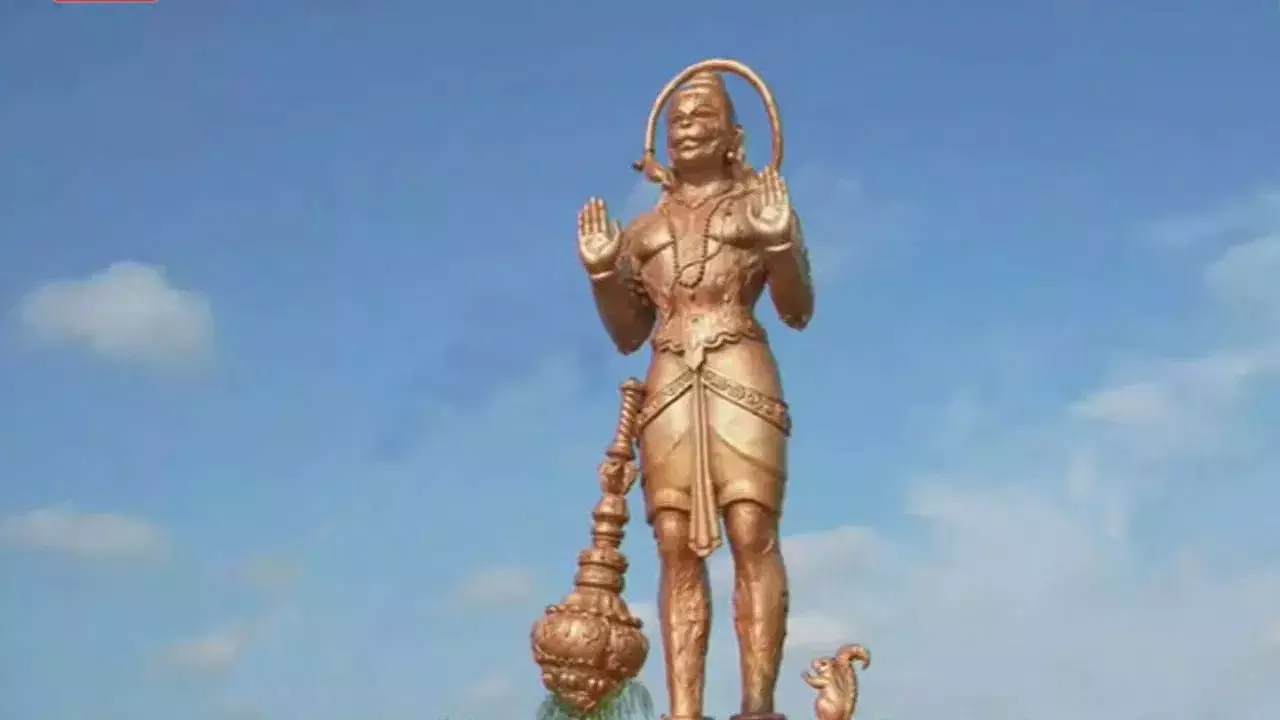
The statue, known as the Panchaloha Abhaya Hanuman, is recognized as the tallest Hanuman statue in North America and was inaugurated in August 2024. Funded by devotees, it stands on privately owned temple grounds, reflecting the religious practices of local residents.
Continue Reading
The Incident: Activist’s Criticism
On February 16, 2026, Texas-based activist Carlos Turcios posted a video on social media platform X, where he criticized the Hanuman statue. In his post, he described the statue as evidence of a cultural “invasion,” stating, “third World Aliens are slowly taking over Texas and America.” He further compared Sugar Land to cities such as New Delhi and Islamabad, questioning the presence of the statue in the United States.
Community Response
The remarks made by Turcios quickly triggered a wave of criticism online. Many users accused him of promoting xenophobia and misunderstanding the protections afforded by religious freedom in the United States. The backlash highlighted the importance of cultural diversity and the rights of immigrant communities to practice their faith.
Several commenters pointed out that the Shri Ashtalakshmi Temple operates legally on private property, emphasizing that it reflects the religious practices of local residents. This aspect of the debate underscores the constitutional protections that allow for diverse places of worship across the nation.
Statistics on Indian-American Assimilation
In response to Turcios’s comments, some users cited language-use statistics to argue that Indian-Americans are among the most assimilated immigrant groups in the U.S. Notably, no Indian language ranks among the top ten spoken at home nationwide, indicating a high level of integration into American society.
Voices from the Community
Adelle Nazarian, an American media personality, responded to Turcios’s remarks, stating, “No, Carlos. Hindus in Texas are not a threat to Western civilization. But you’re too racist and remarkably DENSE to have even bothered studying Hinduism to understand that proselytization is rejected in the faith.” Her comments reflect a broader sentiment within the community that advocates for understanding and respect for diverse religious practices.
Many community members and civil rights advocates opined that the controversy highlights ongoing tensions related to immigration, cultural diversity, and religious expression in the United States. They emphasized that places of worship, regardless of faith, are protected under constitutional freedoms.
Implications for Religious Freedom
This incident raises important questions about the state of religious freedom in the United States, particularly for minority communities. The backlash against Turcios’s comments serves as a reminder of the challenges faced by immigrant groups in asserting their rights and preserving their cultural identity.
As the nation continues to grapple with issues of immigration and cultural integration, it is crucial to foster dialogue and understanding among different communities. The protection of religious freedoms is not only a constitutional right but also a fundamental aspect of a diverse and inclusive society.
Conclusion
The controversy surrounding the Hanuman statue in Sugar Land serves as a significant case study in the ongoing discussions about cultural diversity, religious expression, and the rights of immigrant communities in the United States. As the dialogue continues, it is essential to recognize the contributions of all communities to the rich tapestry of American society.
Frequently Asked Questions
The Hanuman statue, known as the Panchaloha Abhaya Hanuman, is significant as it represents the religious practices of the local Hindu community and is recognized as the tallest Hanuman statue in North America.
The activist, Carlos Turcios, criticized the statue as evidence of a cultural “invasion” and questioned its presence in the United States, comparing the area to cities in India and Pakistan.
The community responded with significant backlash, accusing the activist of promoting xenophobia and misunderstanding religious freedoms, emphasizing the legal operation of the temple on private property.
Note: This incident highlights the ongoing challenges and discussions surrounding cultural diversity and religious freedom in the United States.