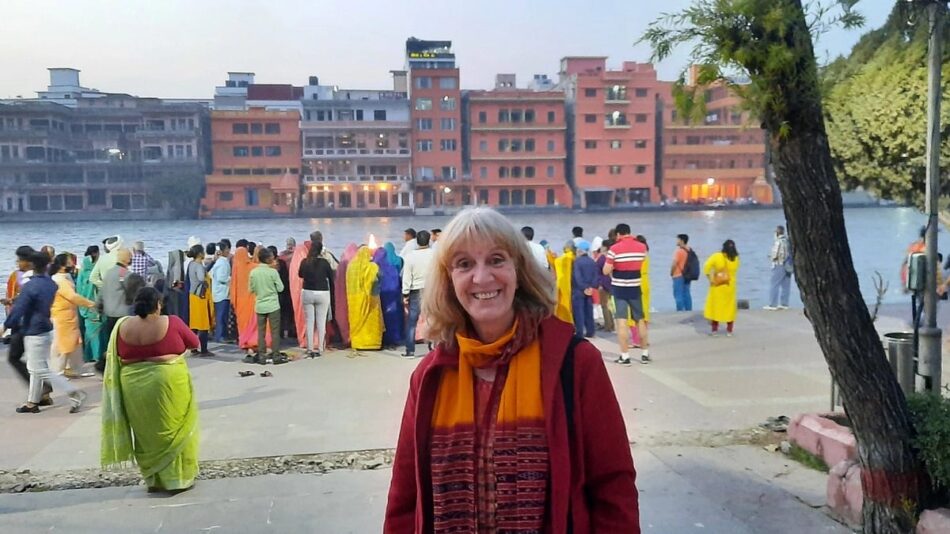
In Conversation with Writer and Author Maria Wirth
Maria Wirth, a writer and author originally from Germany, has made a significant impact through her exploration of spirituality and philosophy. Her journey from Christianity to Hinduism has shaped her views on spirituality and the essence of life.
In this interview, Wirth shares insights from her new book, discusses the challenges faced by Hindu Dharma, and reflects on the future of Hinduism amidst contemporary issues.
Continue Reading
Maria Wirth’s Spiritual Journey
Maria Wirth’s spiritual journey began in her youth, marked by a quest for understanding the meaning of life. Raised in a Christian environment, she often found herself questioning the doctrines of her faith, particularly the concept of eternal damnation. This early skepticism led her to seek answers beyond the confines of Christianity.
After completing her studies in psychology at Hamburg University, Wirth worked with Lufthansa, which allowed her to travel extensively. In 1980, she visited India, intending to make a brief stop on her way to Australia. However, her experiences in India profoundly changed her life, leading her to stay and immerse herself in the country’s spiritual traditions.
Discovering Hinduism and Advaita Vedanta
Wirth’s fascination with Hinduism stemmed from its philosophical depth and the concept of Brahman. She found that Hinduism offered answers to questions she had long pondered. In her view, the essence of Hinduism lies in understanding one’s true self and the nature of consciousness.
She emphasizes the importance of self-reflection and the realization that consciousness is fundamental to existence. Wirth notes, “If this is my essence, then I should find out who I really am. This is the most important question in Hindu Dharma.”
Challenges Faced by Hindu Dharma
In her new book, “Why Hindu Dharma Is Under Attack by Muslims, Christians, and the Left,” Wirth addresses the challenges faced by Hinduism today. She argues that there is a concerted effort to undermine Hindu beliefs and practices, often fueled by misunderstandings and misinterpretations of Hindu philosophy.
Wirth believes that many young Indians, influenced by Western education, are losing touch with their spiritual heritage. She expresses concern that this disconnection may lead to a lack of appreciation for the profound wisdom embedded in Hindu traditions.
The Concept of Brahman
Wirth highlights the significance of Brahman in Hindu philosophy, distinguishing it from the deities traditionally worshipped. She emphasizes that Brahman represents the all-encompassing consciousness that is the essence of existence. This understanding, she argues, is crucial for both Hindus and non-Hindus alike.
She recalls an experience at a conference where she asked students about their understanding of Hinduism. Many were unaware of the concept of Brahman, which shocked her. Wirth believes that this lack of knowledge is detrimental to the spiritual growth of individuals.
Reflections on Contemporary Issues
Wirth’s reflections extend to contemporary issues, including the challenges posed by religious extremism. She points out that certain interpretations of Islam, as presented in the Quran, promote exclusivity and intolerance towards non-Muslims. This, she argues, can lead to a mindset that fosters division and conflict.
In contrast, Wirth advocates for a more inclusive understanding of spirituality, one that recognizes the shared essence of humanity. She believes that fostering awareness of one’s true self can help bridge divides and promote harmony among different faiths.
Maria Wirth’s Vision for the Future of Hinduism
Looking ahead, Wirth envisions a future where Hinduism can thrive by reconnecting individuals with their spiritual roots. She encourages a return to self-inquiry and meditation, emphasizing that understanding one’s essence is vital for personal and collective growth.
Wirth expresses gratitude for the knowledge she has gained from her experiences in India and hopes to share this wisdom with others. She believes that by embracing the teachings of Hinduism, individuals can find strength and resilience in navigating the complexities of modern life.
Frequently Asked Questions
Maria Wirth was inspired to write her book to address the challenges faced by Hindu Dharma and to share her insights on the importance of understanding one’s true self.
Maria Wirth defines Hinduism as a path to understanding one’s true essence and the nature of consciousness, emphasizing the importance of self-reflection and spiritual inquiry.
Wirth identifies challenges such as a lack of awareness among young Indians about their spiritual heritage and the influence of religious extremism as significant threats to Hinduism today.
Note: Maria Wirth’s journey reflects a deep exploration of spirituality, emphasizing the importance of understanding one’s essence and the challenges faced by Hinduism in the modern world.