Kerala Governor: British Introduced Caste in Hinduism
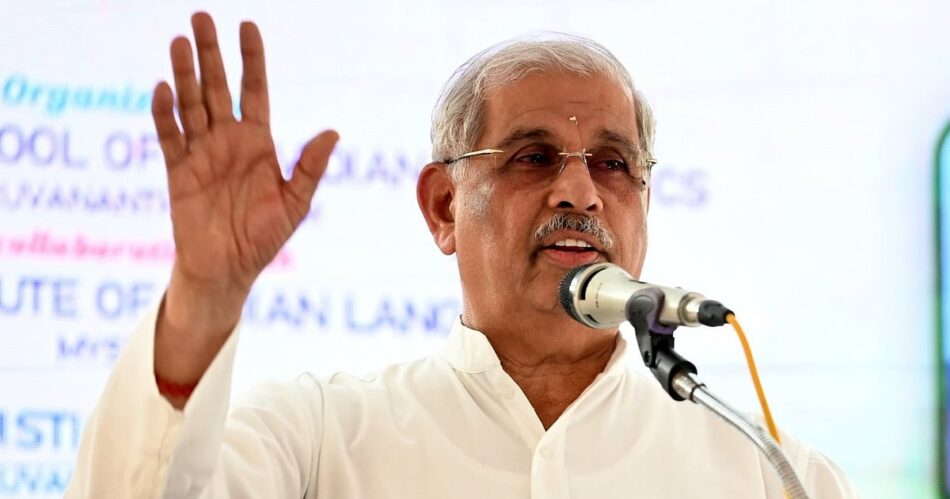
In a recent statement, Kerala Governor Rajendra Vishwanath Arlekar made a controversial claim that the caste system in Hinduism was introduced by the British during their colonial rule in India. This assertion has sparked discussions and debates across various social and political platforms.
Arlekar emphasized the need for unity among the people of India, stating, “Now it is our task to reunite ourselves. If we are not united, there will be no existence of this country.” His comments have reignited conversations about the historical context of caste and its implications in contemporary society.
Continue Reading
Understanding the Caste System
The caste system in India has been a complex social hierarchy that has existed for centuries. Traditionally, it divided society into different groups based on occupation, social status, and ritual purity. The origins of the caste system are often traced back to ancient texts like the Manusmriti, which outlined the duties and responsibilities of different castes.
Colonial Influence on Indian Society
During British colonial rule, the caste system underwent significant changes. The British administration utilized existing social divisions to maintain control over the Indian populace. They categorized and codified caste identities, which arguably solidified and institutionalized the caste system in ways that were not as pronounced before their arrival.
Some historians argue that the British introduced a more rigid interpretation of caste, which was not as strictly defined in earlier times. This perspective suggests that colonial policies exacerbated existing inequalities and created new divisions among communities.
Governor Arlekar’s Perspective
Governor Arlekar’s assertion that the British introduced caste into Hinduism reflects a broader narrative that seeks to challenge the historical understanding of caste as an intrinsic part of Hindu society. His comments can be seen as an attempt to foster a sense of unity among diverse groups within India.
He further stated, “If we are not united, there will be no existence of this country,” highlighting the importance of solidarity in overcoming historical grievances associated with caste.
Reactions to the Statement
The governor’s remarks have elicited mixed reactions from various quarters:
- Supporters: Some individuals and groups have praised Arlekar for addressing the historical injustices associated with caste. They argue that acknowledging the colonial roots of caste can help in healing societal divides.
- Critics: Conversely, critics have accused the governor of oversimplifying a complex issue. They argue that the caste system has deep historical roots that predate British rule, and attributing its existence solely to colonial influence undermines the lived experiences of millions.
The Need for Unity
Amidst the ongoing discussions about caste, Arlekar’s call for unity resonates strongly in a country marked by diverse cultures and communities. The caste system has often been a source of conflict and division, leading to social unrest and discrimination.
Promoting unity requires a multifaceted approach:
- Education: Raising awareness about the historical context of caste and its implications can help foster understanding and empathy among different communities.
- Policy Reforms: Implementing policies that promote social justice and equality can address the systemic issues arising from caste discrimination.
- Community Engagement: Encouraging dialogue and collaboration among diverse groups can help bridge divides and promote social cohesion.
Conclusion
Governor Rajendra Vishwanath Arlekar’s statement about the British introduction of caste in Hinduism has opened up important conversations about the historical and contemporary implications of caste in Indian society. While opinions on the matter vary, the emphasis on unity remains a critical aspect of addressing the challenges posed by caste divisions.
Frequently Asked Questions
The caste system is a social hierarchy that divides people into different groups based on their occupation, social status, and ritual purity. It has been a significant aspect of Indian society for centuries.
British colonial rule utilized existing social divisions to maintain control, categorizing and codifying caste identities, which solidified and institutionalized the caste system in ways that were not as pronounced before.
Unity is crucial for overcoming historical grievances associated with caste, fostering social cohesion, and promoting equality and justice among diverse communities in India.
Note: The discussions surrounding caste and its implications in society are complex and multifaceted, requiring careful consideration and dialogue.