Lord Ram Temple at Lahore Fort Reopened to Public After Restoration
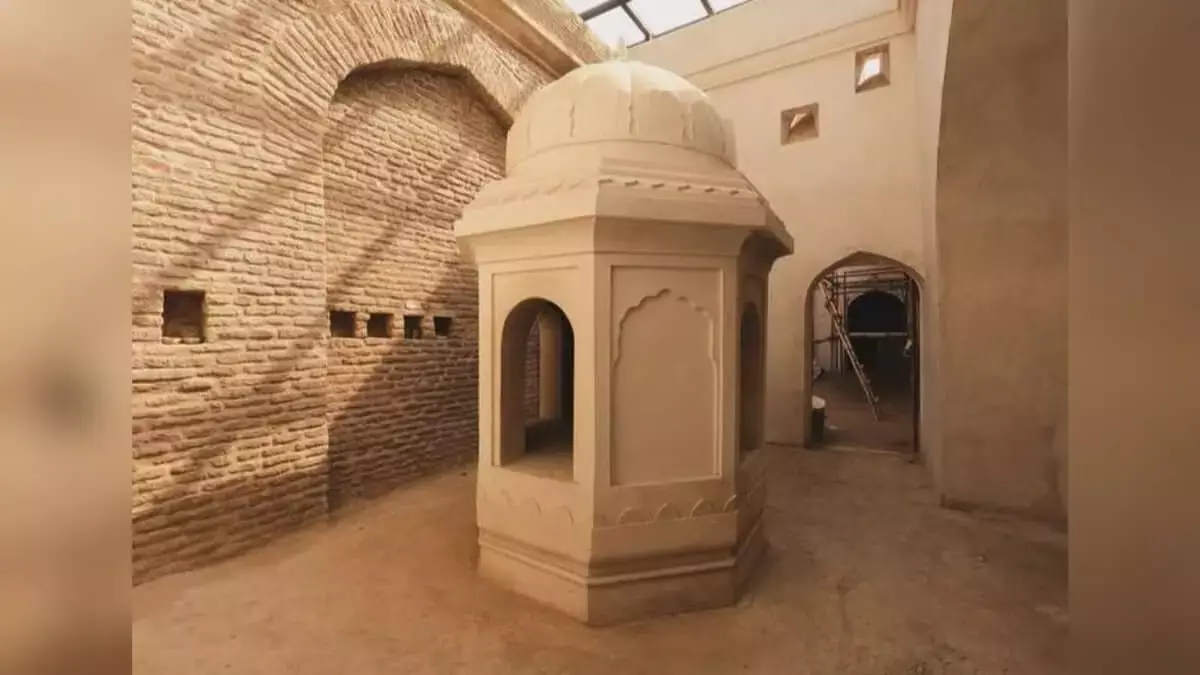
The Loh Temple, dedicated to Lava, the son of Lord Ram, has recently undergone a significant restoration and is now open to the public. This initiative not only highlights the temple’s historical significance but also emphasizes the rich cultural heritage of the Lahore Fort.
Restoration efforts were carried out in collaboration with the Aga Khan Cultural Service-Pakistan, aiming to preserve the historical integrity of the site while making it accessible for visitors.
Continue Reading
Restoration of the Loh Temple
The Loh Temple, located within the Lahore Fort complex in Pakistan’s Punjab province, is a significant historical site dedicated to Lava, one of Lord Ram’s sons. The temple is believed to be integral to the cultural identity of the region, with many Hindus associating the name ‘Lahore’ with Lava.
The recent restoration project, completed by the Walled City Lahore Authority, involved extensive conservation techniques to ensure the temple’s architectural and cultural integrity. This project was part of a broader initiative that included the restoration of two other historic structures: the Sikh-era Hammam and the Athdara Pavilion of Maharaja Ranjit Singh.
Significance of the Lahore Fort
The Lahore Fort is not only a UNESCO World Heritage Site but also a symbol of the city’s diverse cultural history. Its architecture reflects various influences, including Mughal, Sikh, and British colonial styles. The fort has served as a seat of power for different empires throughout history, making it a focal point for cultural exchange and heritage preservation.
According to Tania Qureshi, a spokesperson for the Walled City Lahore Authority, the restoration aims to highlight the cross-cultural heritage of the Lahore Fort. This includes its Sikh and Hindu temples, Mughal-era mosques, and British structures, showcasing the rich tapestry of influences that have shaped the region.
Historical Context
During the Sikh era from 1799 to 1849, the Lahore Fort was home to numerous monuments, many of which have been lost over time. A recent study by a Sikh researcher identified around 100 monuments that were maintained during this period, underscoring the historical importance of the fort.
Dr. Tarunjit Singh Butalia, a US-based Sikh researcher, has been commissioned to write a tour guidebook titled “Lahore Fort during the Sikh Empire.” This guide aims to provide visitors with a deeper understanding of the fort’s historical significance and its role during the Sikh Empire.
Visitor Experience
The reopening of the Loh Temple is expected to enhance the visitor experience at the Lahore Fort. The temple’s open-to-sky design and interconnected chambers provide a unique atmosphere for visitors to explore. The restoration has also included interpretive signage and guided tours to educate visitors about the temple’s history and cultural significance.
As part of the initiative, the Walled City Lahore Authority is focusing on promoting tourism in the area, encouraging both local and international visitors to appreciate the rich heritage of the Lahore Fort and its surroundings.
Future Conservation Efforts
The restoration of the Loh Temple and other historic structures is just the beginning of ongoing conservation efforts at the Lahore Fort. The Walled City Lahore Authority aims to continue preserving and promoting the fort’s historical sites, ensuring that future generations can appreciate the cultural heritage of the region.
As part of these efforts, the authority is also looking into the restoration of other important monuments within the fort complex, further enriching the historical narrative of the area.
Frequently Asked Questions
The Loh Temple is a historical site dedicated to Lava, the son of Lord Ram, located within the Lahore Fort complex in Pakistan.
The restoration highlights the cultural heritage of Lahore, showcasing its historical significance and promoting cross-cultural understanding.
Along with the Loh Temple, the Sikh-era Hammam and the Athdara Pavilion of Maharaja Ranjit Singh were also restored as part of the initiative.
Note: The restoration of the Loh Temple represents a significant step in preserving the rich cultural heritage of Lahore, ensuring that its historical narratives continue to be shared and appreciated.