Medieval Monastery Remains Discovered Beneath Borken’s Historic Center in Germany
- Excavations reveal the well-preserved foundations of the Marienbrink Monastery church.
- Archaeological findings indicate continuous occupation of the site from the Late Middle Ages to modern times.
- Understanding the historical significance of the site can inform future urban development in Borken.
Recent archaeological excavations in Borken, Germany, have uncovered significant remains of a medieval monastery beneath the town’s historic center. This discovery sheds light on the area’s rich history and provides insights into urban development over centuries.
The findings not only highlight the architectural features of the Marienbrink Monastery but also reflect the complex layers of history that have shaped Borken, making it a focal point for both historians and urban planners.
Continue Reading
Background of the Excavation
In preparation for a new health center and Caritas building in the Brinkerhof quarter, archaeologists from the Landschaftsverband Westfalen-Lippe and a private excavation firm conducted preliminary investigations. These efforts began in 2024 and aimed to assess the historical significance of the site before construction commenced.
Discovery of the Marienbrink Monastery
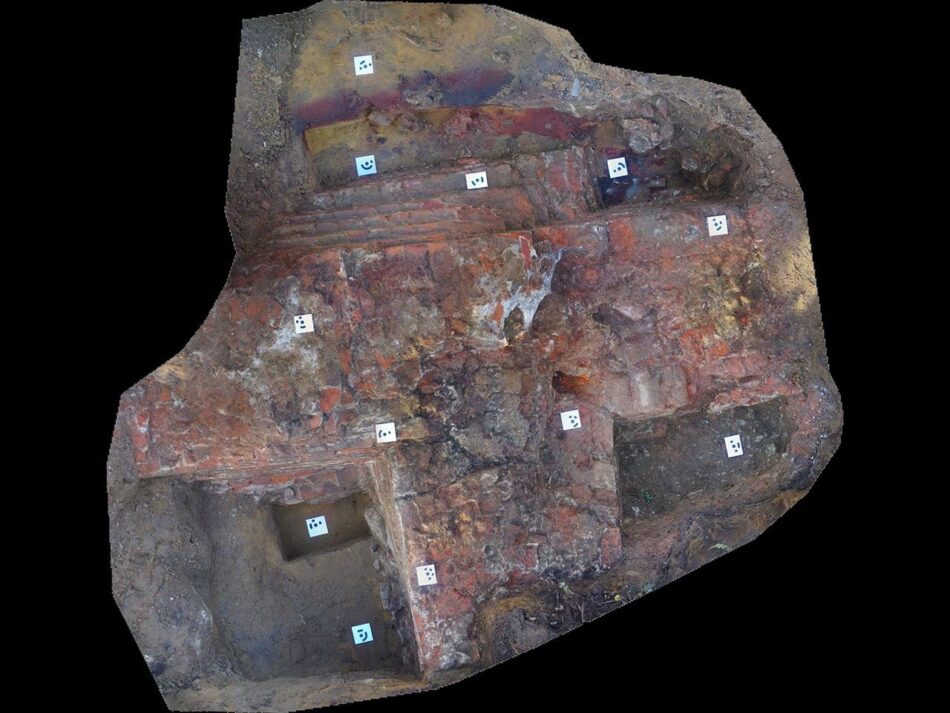
The highlight of the excavation was the discovery of the substantial foundations of the church of the former Marienbrink Monastery, which dates back to the Late Middle Ages. Initial test trenches and geophysical surveys revealed sections of the western and southern walls of the church. The walls, constructed with red brick and lime mortar, showcase impressive craftsmanship from the 15th century.
Excavation Findings
Further excavation efforts in late 2025 exposed more of the church’s structure. Notably, the outer wall measures approximately 1.25 meters wide, and the preserved foundation rises about 1.60 meters high. Thick rubble layers covered sections of the masonry, which contributed to the preservation of these ancient structures.
Historical Context
The Marienbrink Monastery played a significant role in the region’s history until its dissolution in the early 19th century. Following the monastery’s closure, the church was demolished, and in 1818, a synagogue was established on the grounds, incorporating elements from the older complex. This synagogue was heavily damaged during the November pogroms of 1938 and subsequently demolished in 1939.
Impact of World War II
Archaeological assessments also uncovered a World War II air raid bunker southwest of the monastery remains. This bunker extends across a significant portion of the planned development area, indicating that the war had a profound impact on the urban landscape of Borken. Many buildings in the center were destroyed during the conflict, leading to changes in street lines and property boundaries during post-war reconstruction.
Ongoing Excavations and Findings
In late 2025, additional trenches were opened in garden areas designated for an underground parking garage. Archaeologists documented various features, including filled cellars from earlier houses, an animal carcass pit, and several pits and postholes from the Early Modern period. The ceramic fragments recovered from these layers date from the late High Middle Ages to modern times, indicating a long history of continuous occupation and rebuilding.
Future Implications
The ongoing excavations in Borken are not only revealing historical artifacts but also providing essential information for urban planning. Each layer of soil reflects a different period in Borken’s past, from medieval brick walls to wartime concrete. Understanding these layers can guide future development, ensuring that the historical significance of the site is preserved.
Conclusion
The discovery of the Marienbrink Monastery remains is a significant archaeological find that enriches our understanding of Borken’s historical narrative. As excavations continue, they will provide further insights into the town’s past and inform future urban planning efforts, balancing development with the preservation of cultural heritage.
Frequently Asked Questions
The excavations revealed the well-preserved foundations of the Marienbrink Monastery church, dating back to the 15th century, along with various artifacts indicating continuous occupation of the site.
The findings provide crucial historical context that can guide urban planning, ensuring that development respects and preserves the area’s rich cultural heritage.
The monastery played a vital role in the region’s history until its dissolution in the early 19th century, and its remains reflect the architectural and cultural evolution of Borken.
Note: Provide a strategic conclusion reinforcing long-term business impact and keyword relevance.