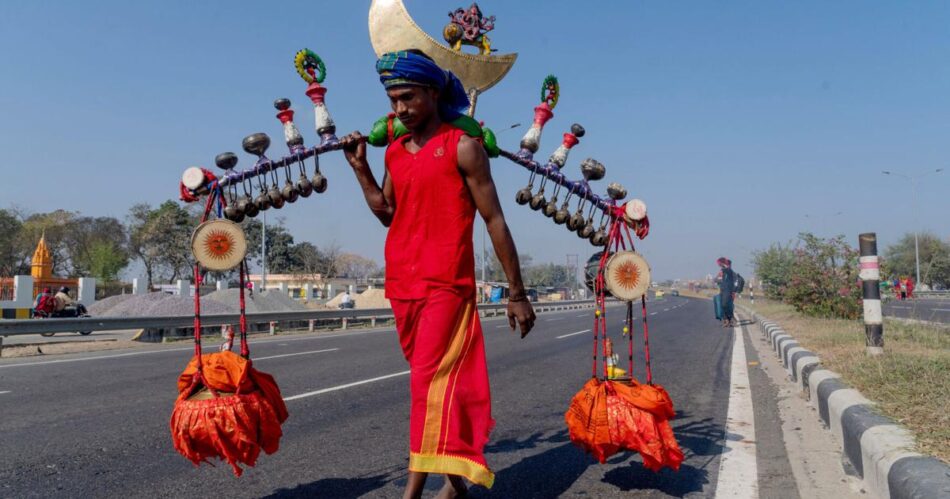
The Question of Hinduism and Ethnicity
The intricate relationship between Hinduism and ethnicity raises important questions about identity, culture, and the global presence of this ancient religion. With over a billion adherents worldwide, Hinduism is often closely associated with India, leading to discussions about its ethnic implications.
This article explores why Hinduism retains such a strong connection to Indian ethnicity, the historical context behind this relationship, and how it affects the perception of Hinduism in a diverse world.
Continue Reading
Understanding Hinduism’s Ethnic Connection
When discussing Hinduism, the immediate association is often with Indian culture and ethnicity. This connection is not merely coincidental; it is deeply rooted in the history and development of the religion itself. The majority of Hindus can trace their ancestry back to the Indian subcontinent, which has been the cradle of Hindu philosophy, rituals, and traditions for millennia.
The Global Presence of Hinduism
Despite its significant Indian roots, Hinduism has spread across the globe, with communities in various countries. However, the overwhelming majority of practitioners still identify as Indian or of Indian descent. This phenomenon can be attributed to several factors:
- Historical Development: Hinduism has evolved predominantly within the geographical boundaries of India, shaping its cultural and ethnic identity.
- Migration Patterns: Indian diaspora communities have carried their religious practices with them, reinforcing the association between Hinduism and Indian ethnicity.
- Religious Pluralism: India has historically been a melting pot of various religions, with Hinduism at its core, contributing to the ethnic identity of its followers.
Reasons for the Strong Ethnic Association
Two primary reasons explain the strong ethnic association of Hinduism with India:
1. Cultural and Religious Diversity
India is renowned for its extraordinary religious diversity, hosting various communities such as Jews, Zoroastrians, and Buddhists. This pluralism has fostered a culture of acceptance and coexistence, allowing Hinduism to thrive without the need for aggressive proselytization.
2. Lack of Imperial Expansion
Unlike many other religions that spread through conquests, Hindu rulers historically did not prioritize territorial expansion. This lack of imperial ambition meant that Hinduism did not impose itself on neighboring cultures through military force, allowing it to remain closely tied to its Indian origins.
The Role of ISKCON
The International Society for Krishna Consciousness (ISKCON) is often cited as an example of Hindu proselytism. In its early years, ISKCON’s approach to gaining followers was seen as somewhat aggressive. However, over time, the organization has shifted towards more traditional methods of sharing its teachings, focusing on education and cultural exchange rather than coercion.
Hinduism in the Modern World
Today, Hinduism faces the challenge of navigating its identity in a globalized world. As it interacts with various cultures, the question of ethnicity becomes increasingly relevant. The following points highlight the ongoing evolution of Hinduism in contemporary society:
- Globalization: The spread of information technology and communication has allowed Hinduism to reach diverse audiences, leading to a broader understanding of its practices and beliefs.
- Interfaith Dialogues: Hinduism is increasingly participating in interfaith discussions, promoting a message of inclusivity and understanding across different religions.
- Adaptation: Many Hindu communities are adapting their practices to fit into new cultural contexts while maintaining their core beliefs.
Frequently Asked Questions
Hinduism is predominantly associated with Indian ethnicity due to its historical development within the Indian subcontinent and the majority of its practitioners being of Indian descent.
Hinduism has spread through migration and the establishment of diaspora communities, as well as through cultural exchanges and interfaith dialogues.
ISKCON has contributed to the global perception of Hinduism by promoting its teachings and practices, although its early methods of outreach were sometimes viewed as aggressive.
Note: The relationship between Hinduism and ethnicity is complex, shaped by historical, cultural, and social factors. Understanding this connection is essential for appreciating the rich tapestry of Hindu identity in the modern world.