This Isn’t India: Sikh Parade in New Zealand Disrupted by Far-Right Protest
A peaceful Sikh religious procession in South Auckland was disrupted on Saturday when a far-right group blocked its route, leading to significant outrage across New Zealand. The incident has drawn reactions from political and religious leaders both locally and internationally.
The Sikh community was conducting a nagar kirtan, a sacred procession involving devotional singing and community service, organized by the Nanaksar Sikh Gurdwara, when the confrontation occurred. The event had received all necessary approvals from local authorities.
Continue Reading
The Incident Unfolds
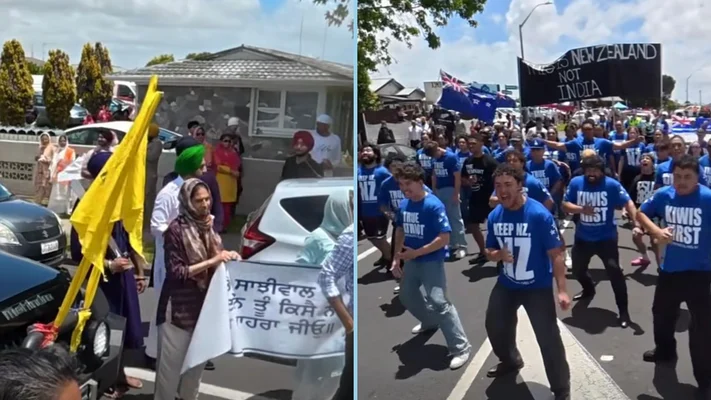
The disruption took place in Manurewa, where members of the Sikh community were peacefully participating in the procession along Great South Road. As the procession progressed, they were confronted by a group identifying themselves as the True Patriots of New Zealand. This group, adorned in blue shirts and holding various placards, performed a Māori haka directly in front of the Sikh procession, effectively blocking its path.
Police Response
In response to the escalating situation, police officers quickly intervened, placing themselves between the two groups to prevent any potential violence. Although tensions were high, no physical altercations were reported. Footage of the encounter circulated on social media, showcasing the protesters chanting Christian slogans such as “One True God” and “Jesus, Jesus,” while displaying banners that read “This is New Zealand, not India.”
Community Reactions
The Sikh organizers expressed their surprise and distress over the disruption. Members of the Sikh community, including Nihangs, displayed remarkable restraint and calm during the standoff, emphasizing the importance of maintaining peace.
Statements from Leaders
Brian Tamaki, a Pentecostal pastor associated with Destiny Church and the protesting group, later shared a video of the incident on social media platform X. He stated, “THIS IS OUR LAND. THIS IS OUR STAND. Today, True Patriots stood their ground in South Auckland. No violence. No riots. Just my young men performing a haka to send a clear message: KEEP NZ, NZ.”
However, Tamaki also made unsubstantiated claims regarding the Sikh community, alleging that they were “Khalistan terrorists” wielding weapons and flying foreign flags. Such statements have raised concerns about the spread of misinformation and the potential for further division within the community.
Broader Implications
This incident highlights the ongoing tensions surrounding immigration and cultural identity in New Zealand. The far-right group’s actions reflect a growing trend of anti-immigrant sentiment in various parts of the world, which can lead to increased polarization and conflict within communities.
Political and Social Context
New Zealand has long been known for its multicultural society, but recent events indicate a shift in public sentiment. The disruption of the Sikh parade has sparked discussions about the need for greater tolerance and understanding among different cultural groups.
- Importance of community dialogue to address cultural misunderstandings.
- Need for educational programs promoting diversity and inclusion.
- Role of political leaders in fostering a more accepting environment.
Frequently Asked Questions
A nagar kirtan is a Sikh religious procession that involves devotional singing and community service, typically organized by a gurdwara.
The Sikh community maintained calm and restraint during the protest, emphasizing the importance of peace despite the disruption.
The incident has highlighted existing tensions regarding immigration and cultural identity, prompting discussions about the need for greater tolerance and understanding among diverse communities.
Note: The disruption of the Sikh parade in New Zealand serves as a reminder of the challenges faced by multicultural societies in addressing issues of identity and acceptance.