Hindutva, Neoliberalism, and the Politics of Capitalist Colonisation in India
The interplay between Hindutva and neoliberalism has become a defining characteristic of contemporary Indian politics. As the country navigates its identity and economic trajectory, the fusion of these two ideologies poses significant implications for its secular fabric and democratic institutions.
Understanding this relationship requires a deep dive into the historical context, the rise of Hindutva as a political ideology, and the neoliberal economic policies that have shaped India’s governance in recent decades.
Continue Reading
The Distinction Between Hinduism and Hindutva
Hinduism is an ancient and diverse religious tradition, known as Sanatana Dharma, which encompasses a variety of philosophies, practices, and beliefs. In contrast, Hindutva, a term coined by Vinayak Damodar Savarkar in 1923, represents a political ideology that seeks to redefine Indian national identity as inherently linked to Hindu culture. This ideology promotes a vision of India as a Hindu nation, often marginalizing minority communities and challenging the secular principles enshrined in the Indian Constitution.
The Rise of Hindutva in Modern Politics
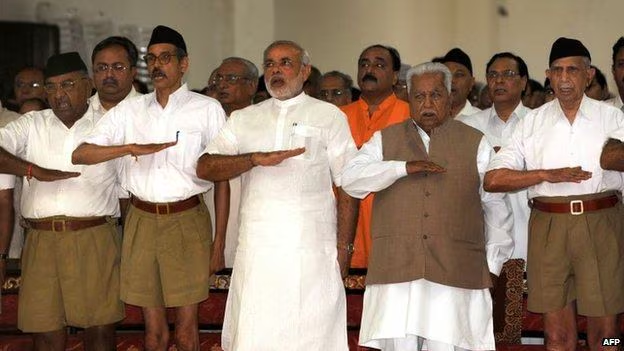
Under the leadership of Prime Minister Narendra Modi, Hindutva has transitioned from the fringes of Indian politics to a central tenet of governance. The Rashtriya Swayamsevak Sangh (RSS), which promotes Hindutva, has remained a staunch supporter of Modi, viewing him as the ideal leader to advance their agenda. This shift has raised concerns about the increasing normalization of Hindutva in the political landscape.
Key Developments
- The call for “ghar wapsi” (reconversion to Hinduism) by RSS chief Mohan Bhagwat highlights the aggressive nature of Hindutva politics.
- The Congress party’s ideological drift and perceived corruption have created a political vacuum that Hindutva has exploited.
- The anti-corruption movement led by Anna Hazare in the early 2010s played a significant role in shaping public opinion and facilitating the rise of Hindutva.
Neoliberalism and Its Economic Implications
Neoliberalism emerged in India during the early 1990s as a response to a severe financial crisis. Economic reforms introduced by leaders such as Dr. Manmohan Singh aimed to liberalize the economy, promoting deregulation and privatization. The BJP, upon coming to power, reframed these policies within a nationalist narrative, merging economic liberalization with Hindutva.
Consequences of Neoliberal Policies
- Increased corporate influence over politics and policy-making.
- Widening economic inequality, with wealth concentrated among a few major conglomerates.
- Jobless growth, as the shift towards a market-driven economy has not translated into adequate employment opportunities.
The Interconnection of Hindutva and Neoliberalism
The relationship between Hindutva and neoliberalism is complex and multifaceted. Critics argue that the fusion of these ideologies has created a model where cultural politics and economic policy reinforce each other, leading to a form of governance that prioritizes corporate interests over social equity.
Impacts on Society
- The rise of a “neo-middle class” that embraces both economic liberalization and cultural nationalism.
- Identity politics that distract from critical structural issues such as unemployment and poverty.
- The consolidation of corporate-state alliances that shape policy directions in favor of big business.
Concerns About Democratic Institutions
Modi’s leadership style has raised alarms regarding the erosion of democratic institutions in India. Critics argue that his centralization of power and the weakening of checks and balances threaten the democratic fabric of the nation.
International Relations and Right-Wing Politics
Modi’s approach to international relations, particularly his interactions with global leaders, has drawn scrutiny. Analysts suggest that Hindutva aligns with broader right-wing movements worldwide, combining nationalism with market-oriented economic policies.
Frequently Asked Questions
Hinduism is a diverse religious tradition, while Hindutva is a political ideology that seeks to define Indian identity in terms of Hindu culture.
Neoliberalism has led to economic liberalization, increased corporate influence, and widening inequality, often at the expense of social welfare.
The rise of Hindutva poses challenges to India’s secularism and democratic institutions, raising concerns about the consolidation of power and erosion of rights.
Note: The intersection of Hindutva and neoliberalism presents significant challenges for India’s future, necessitating a critical examination of their implications for democracy and social equity.